
A few more photos from our time in Cambodia.


A few more photos from our time in Cambodia.
In addition to our visit to The Killing Fields, we also visited Tuol Sleng, which is a school in Phnom Penh which was turned into a prison and torture chamber during the reign of the Khmer Rouge.


It is estimated that between twenty and thirty thousand people passed through these gates between 1975 and 1979 when the allied army finally liberated Phnom Penh.
There are reports that only seven people survived captivity at Tuol Sleng or “S-21” as it was nicknamed, although there was a lot of confusion towards the end, and it’s possible as many as 150 people actually escaped Tuol Sleng.



One of those seven survivors was there when we visited, so we were able to meet him, and hear a bit of his story. His name is Chum Mey, and there is actually a picture of his cell further down in this post.
He was a prisoner at Tuol Sleng for two years, and saw his wife shot and killed in front of him during the chaos when the Khmer soldiers were fleeing Phnom Penh.

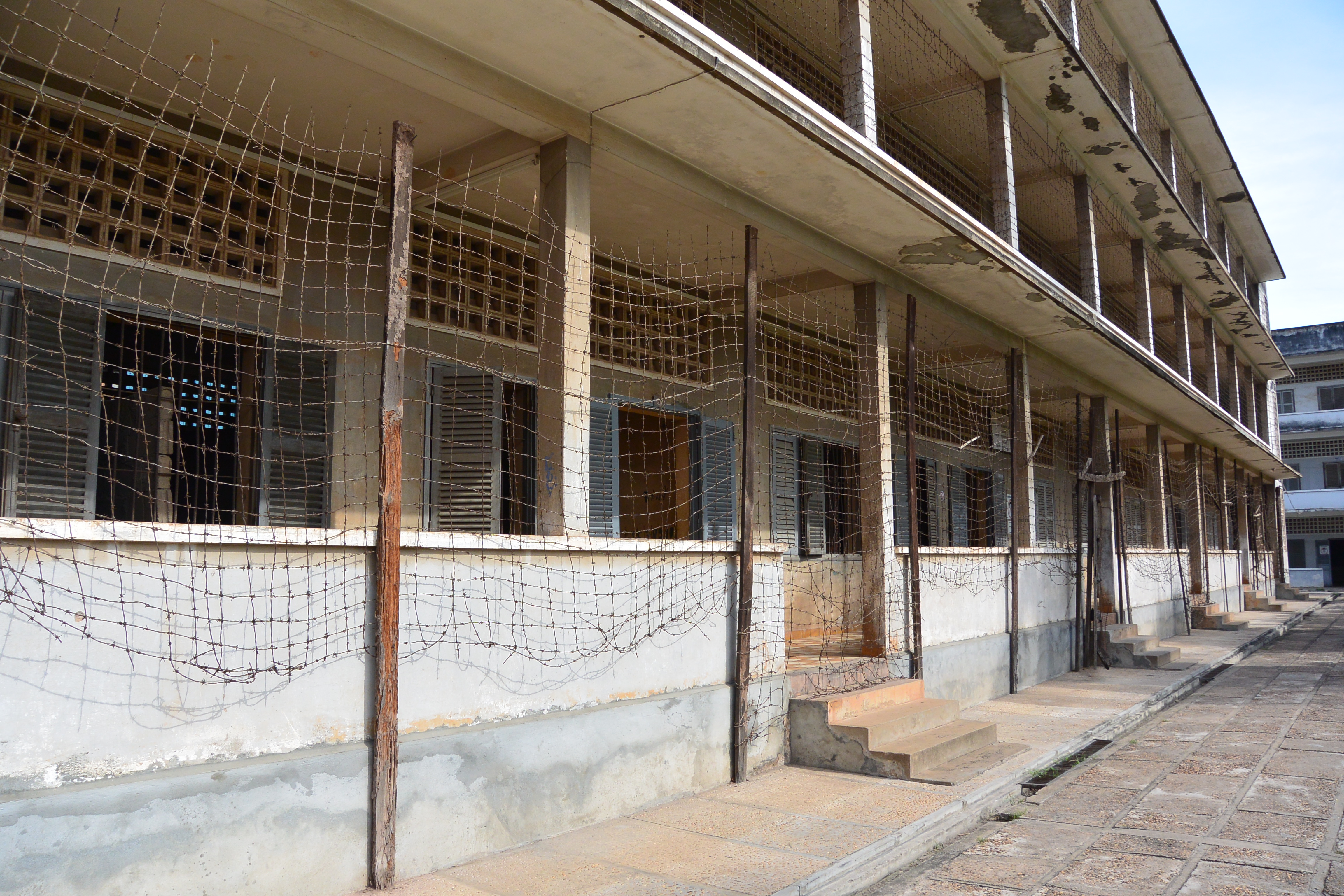
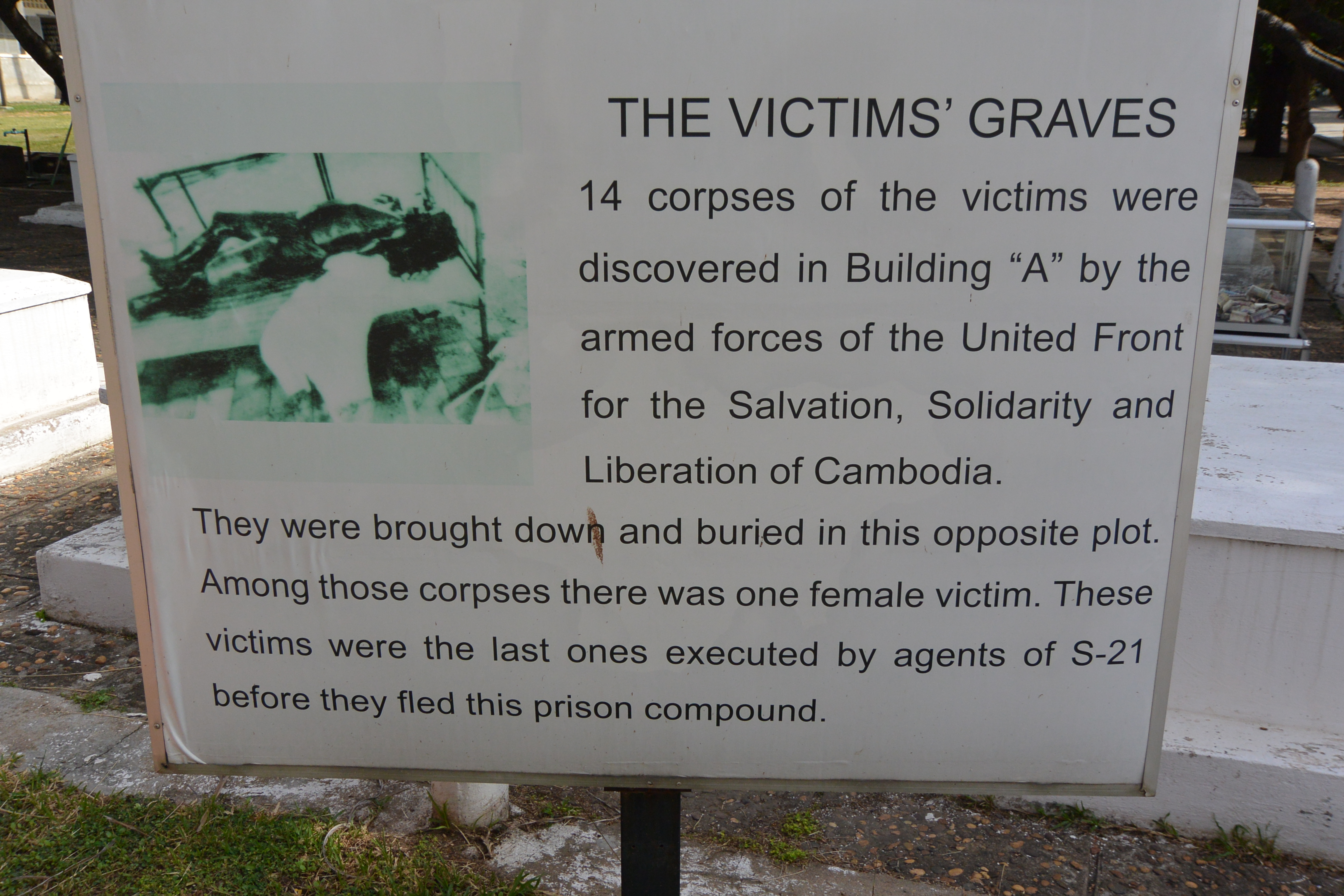
Walking around Tuol Sleng is quite eery. It’s very quiet, but the barbed wire is still around the perimeter of the building, and the fencing is still on the front of all of the buildings, it was used to keep prisoners from committing suicide by jumping from the balcony when they couldn’t take the torture anymore. There are several graves running down the center of the first building compound.


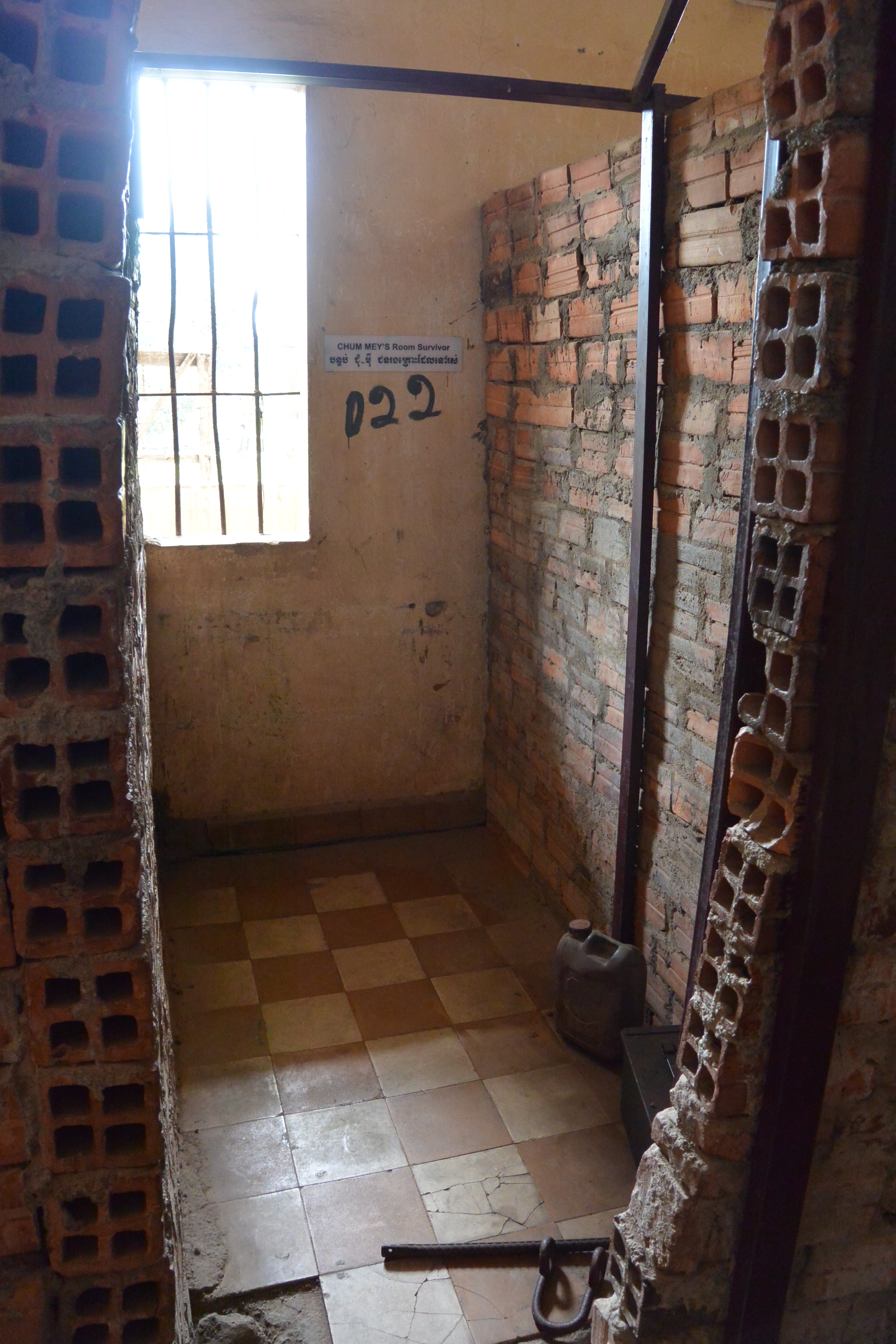
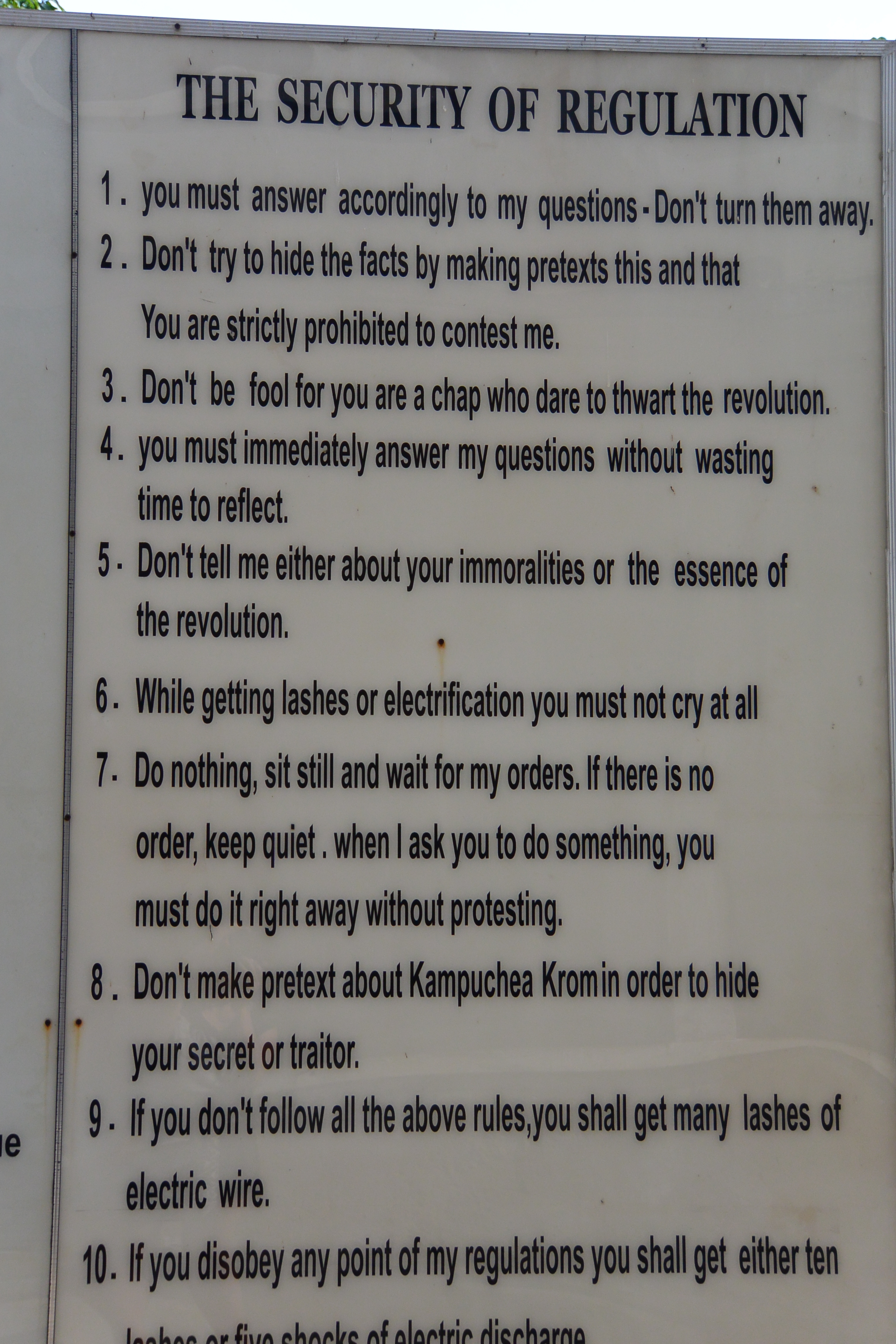
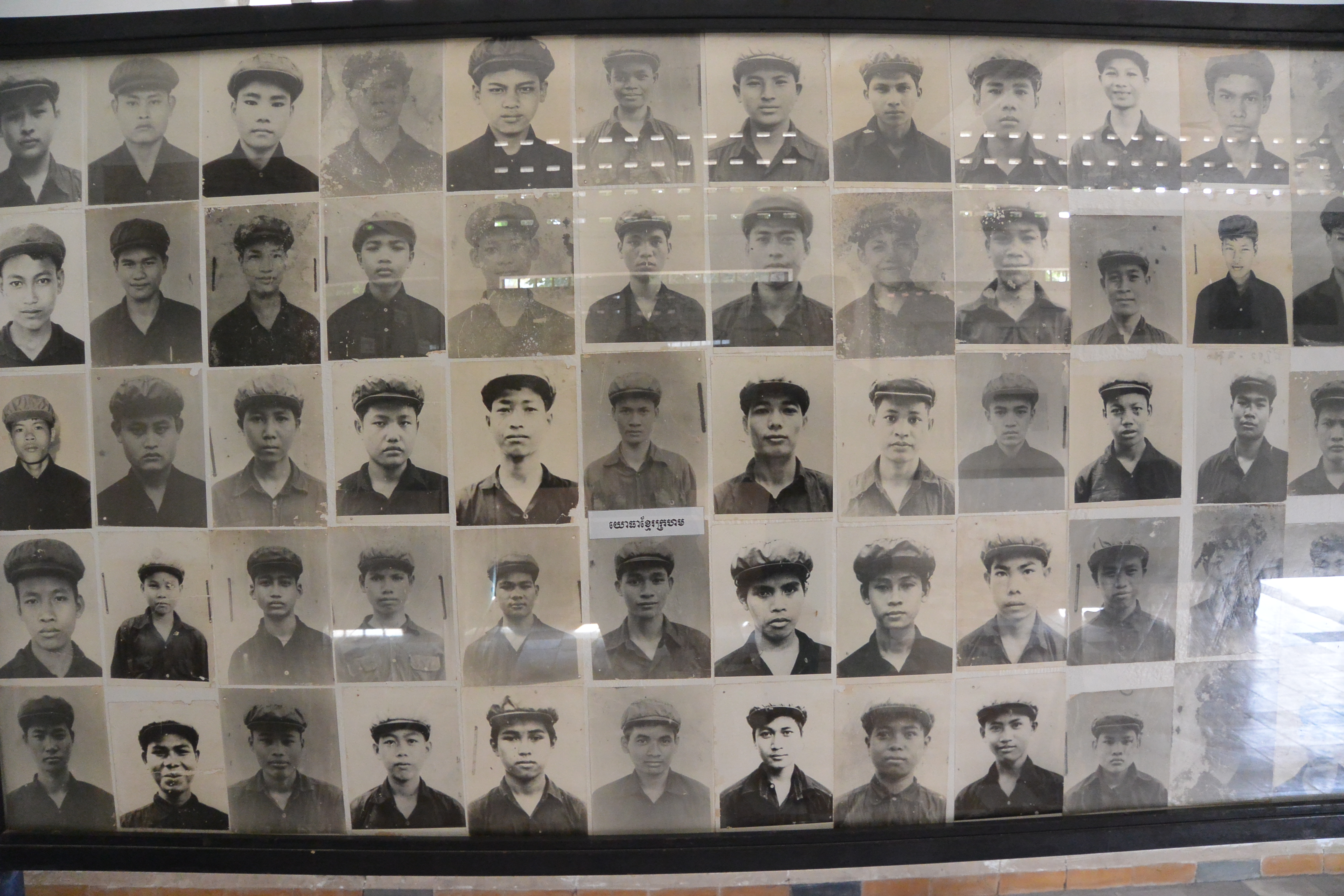
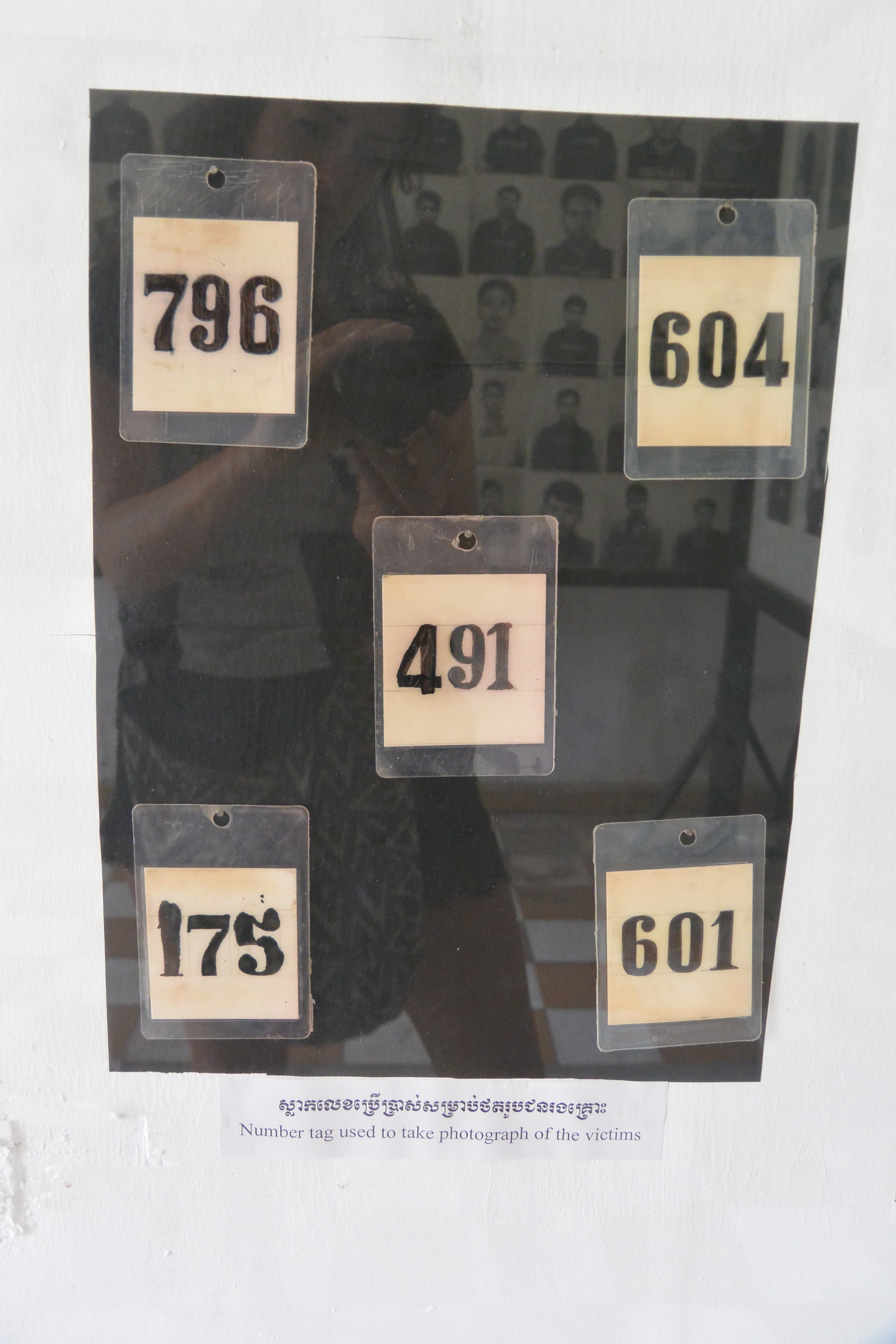
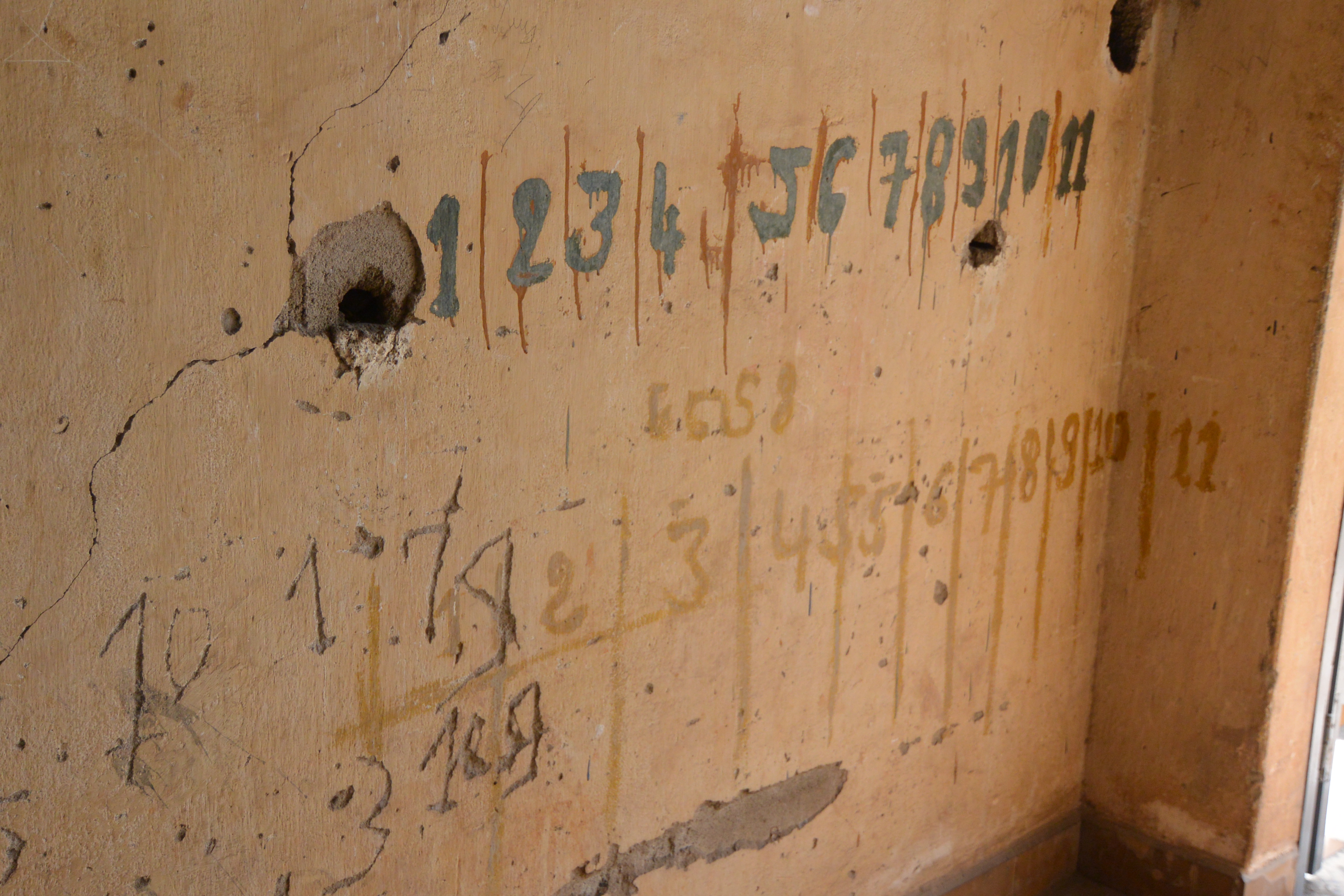
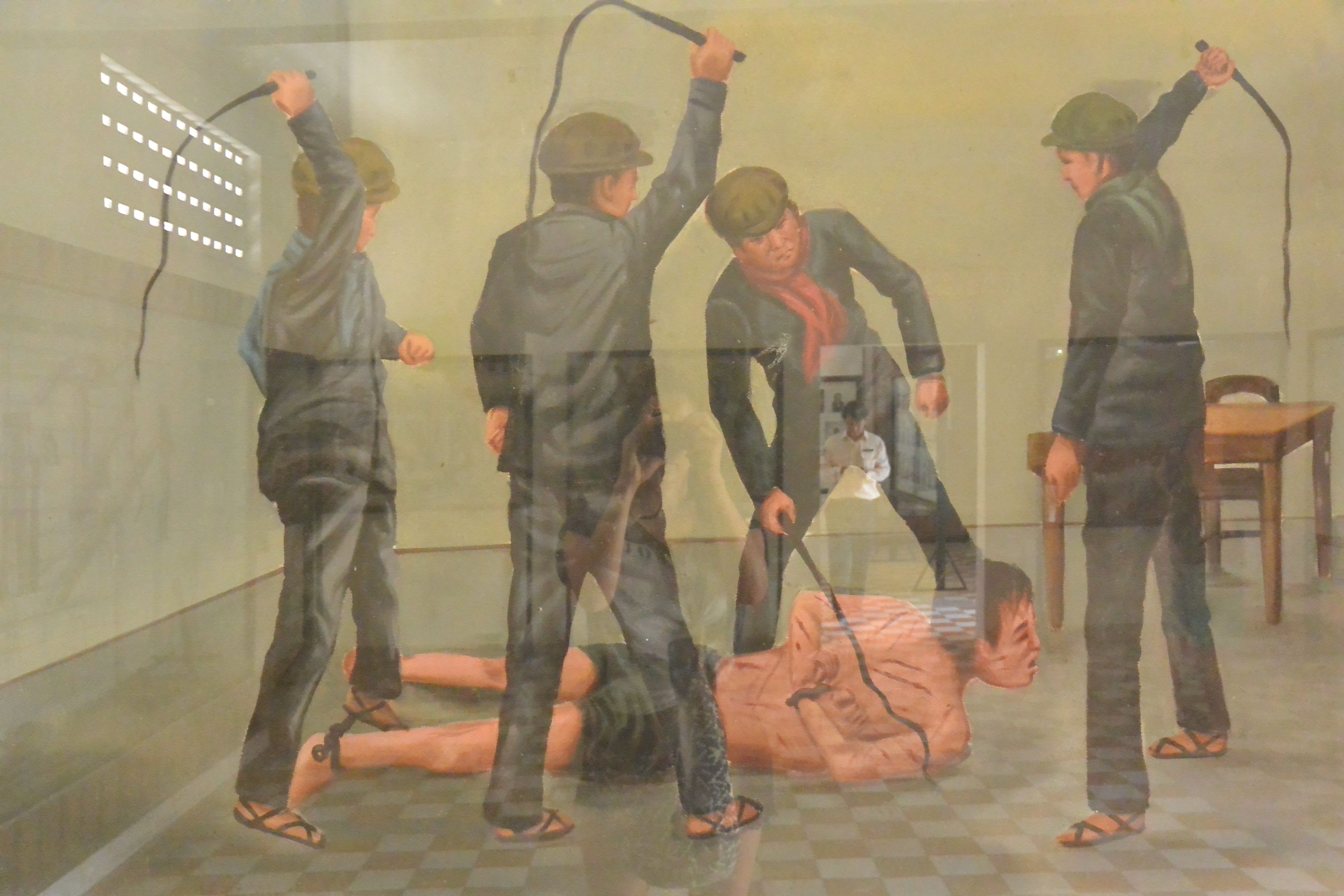
There are chains on the floors, and etchings of letters and numbers on the walls, as well as many pictures of prisoners, their personal effects, and the different torture methods that were employed by Khmer Rouge soldiers to get prisoners to confess to being part of the opposition government (whether they were or weren’t).


There are also personal stories from the survivors, and lots more information about the Khmer Rouge, and that time period in Cambodian history. Definitely a must-visit place when you’re in Phnom Penh.
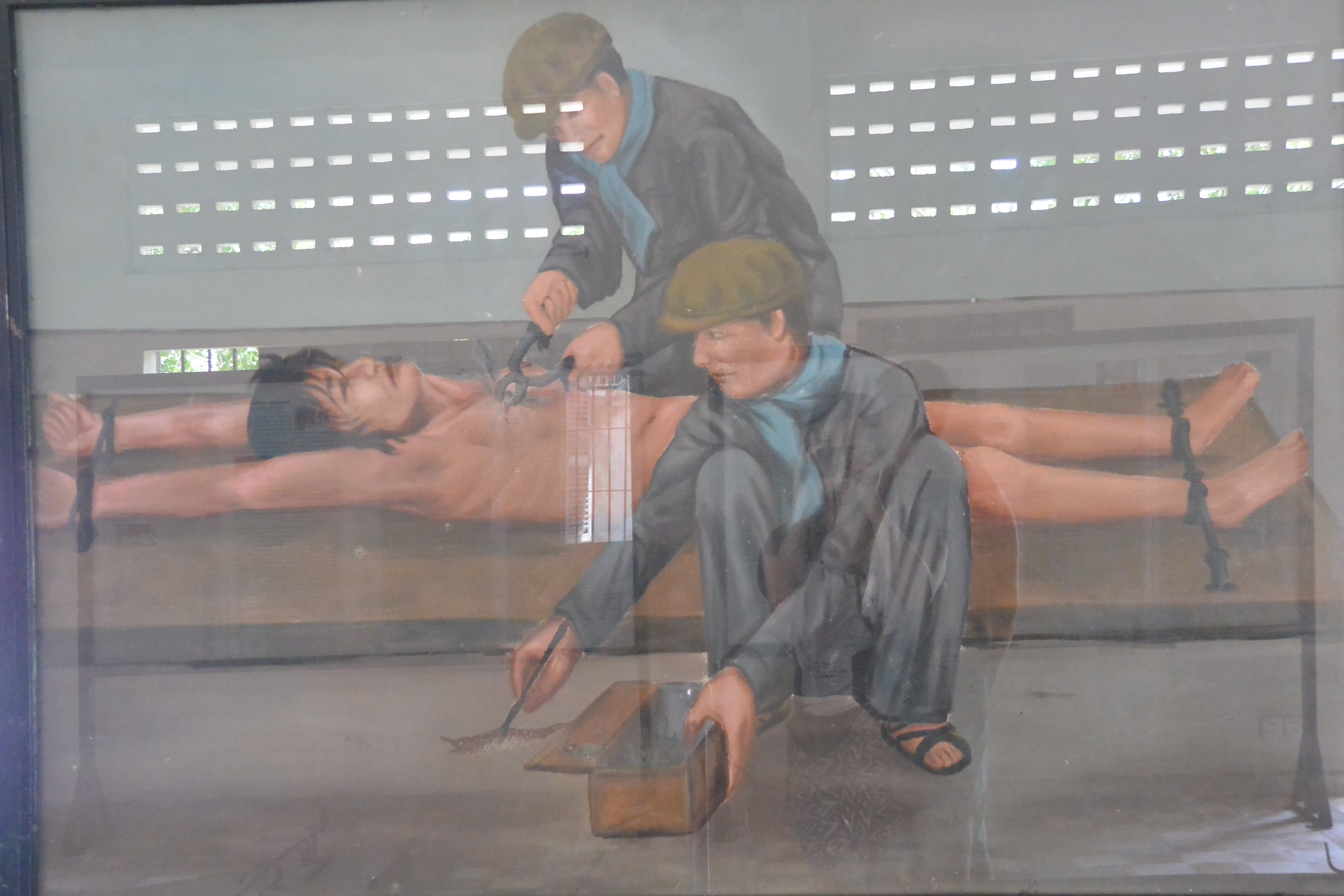

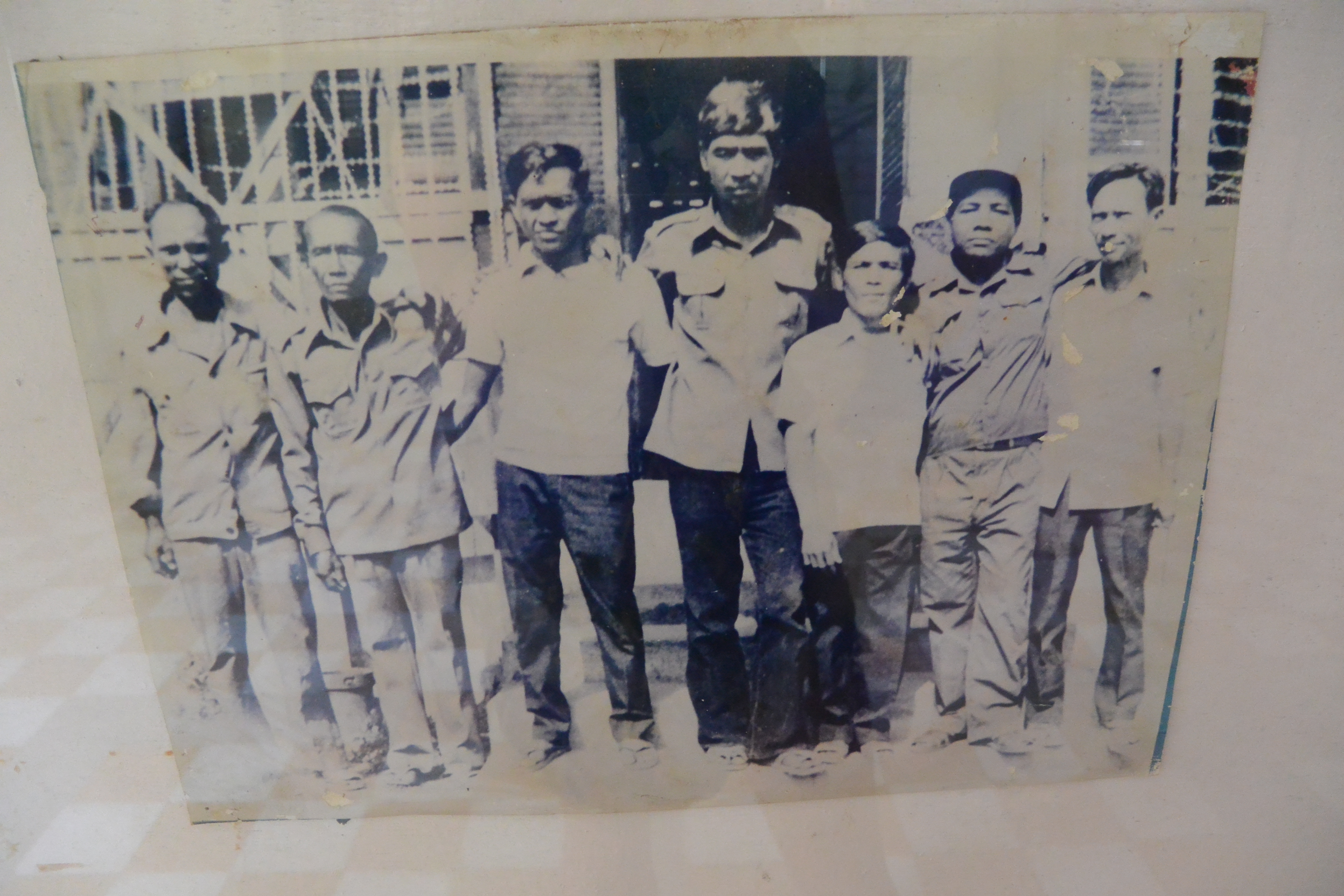


You can learn more about Tuol Sleng here.
I wanted to share a few extra pictures from Cambodia that didn’t really fit in anywhere else (I only took about 6000 photos). It’s such a beautiful country, and the people there are so wonderful and friendly. I felt truly lucky to have had the opportunity to visit.


We were only in Cambodia for about 10 days, we took the bus from Bangkok to Siem Reap, and then another bus from Siem Reap to Phnom Penh, and then flew back to Bangkok, but here are a few things I learned in the process:
Clothing– This is mainly for the temples, if you’ll be visiting Angkor, but make sure to bring a thin, white cotton t-shirt, and a sarong. If you don’t, you’ll end up buying a sarong, and a shoulder wrap at the entrance to some of the temples in order to get in. I only brought a black t-shirt, and had my own sarong, and by the end of the day at Angkor I was so hot I just wanted to strip naked and dive into the lake. Which I’m pretty sure would be frowned upon.
Another note here, this is not always enforced. I was kind of annoyed to be there completely covered up, because we’d been told on our sunset visit the night before that we wouldn’t be allowed in otherwise, only to see other girls coming in in tank tops and short shorts. It is a religious site, so you shouldn’t be coming in wearing that anyways, but it was soooo hot. You’ll be much more comfortable in just a t-shirt and sarong than if you wear a tank top, and have to spend the whole day with a shawl around your shoulders.
Currency– This one is a bit tricky, but bear with me. Unlike Thailand, the US dollar is accepted almost everywhere in Cambodia, if you go to an ATM to get money out, you will get US dollars, not Riel. There is also a fee to change US dollars to Riel, so you’ll be paying an ATM fee, and then another fee at the money exchange.
The reason you would want to use Riel, is because sometimes you will end up paying less than you would with US dollars. For example, if a bottle of water is 2000 KHR, but $1 USD is 4000 KHR, if you have USD, they will charge you $1.00, so you’ll end up paying twice as much. Also, exchange rates can vary from store to store, lots of places will have it right on the register that $1 USD is equal to 4100, or 4000 KHR, so sometimes you feel like you are kind of getting the short end of the stick no matter what you do.
There is no fee to transfer TBH, or other SEA currency to Riel, so the best advice I can give you is get out as much TBH as you are comfortable with carrying before you cross the border, and then take it to a money exchange once you are in Cambodia, to avoid paying the USD to KHR fee. You’ll still likely end up visiting the ATM once or twice, depending on how long you stay, but you can cut down on your fees a bit by doing it this way.
Tuk-tuks– The tuk-tuks in Cambodia are a lot more open than the ones in Thailand, and if you go to the land mine museum, Angkor, the Killing Fields, etc, really anywhere outside of the cities, it can get very dusty, since many of the roads are unpaved. Always bring your sunglasses with you, even if you’re traveling at night, to keep dirt out of your eyes. Sometimes I even wore a sheer scarf over my face for long drives.
Night buses– There are a few ways to travel around Cambodia, but the cheapest and easiest is definitely via bus or mini-bus. That being said, the roads in Cambodia are not great. Most of them are unpaved and bumpy, and can get muddy if it’s rained. Also, outside of the city there are no lights on the road, so traveling at night is not the best idea. There are night buses offered at many of the tourist information places, it sounds like a great deal, for around $15USD you can curl up in a full reclining chair with a movie playing, sleep through the night, and wake up at your destination.
It’s very attractive because it gives you an extra day to sight-see, instead of spending a whole day on the bus. But I heard over and over again that night buses are very dangerous, and after our experiences with the driving and road conditions in Cambodia, even during the day time, it just doesn’t seem worth it, even to gain a little extra time.
Schemes– In addition to the one I mentioned here, another “scheme” to get money out of tourists happens if you’re traveling from Thailand to Cambodia via bus. When we bought our bus ticket, we were told it was about 6 hours from Bangkok to Siem Reap. With transfers, picking up other people, and a stop to get a visa at the border, it was more like 11 hours before we got to the bus terminal in Cambodia where we were supposed to be picked up to go the last hour or so to Siem Reap.
Once we got there, we were told the bus to take us wouldn’t be coming for another 3 hours, but if we wanted to chip in together with some of the other people to take a mini-bus, we could leave immediately, and it would also take less time than taking a large bus, because we would be taken directly to our hotels.
I’d met a guy at the border, a frequent traveller to Cambodia who told me this is very common, because even though people have already paid for their tickets to get all the way to their hotel, after that many hours on the road, they are usually willing to pay more to get there faster. We caved in and did it, just because we were completely exhausted, and it was another 200 TBH (or $6 USD) per person. It’s up to you whether you pay it or not, but it’s good to be aware either way.
Border– One more thing to mention on that, we had no issues crossing into Cambodia, but we did have a guide that told us to be wary of people in uniform at the border. Apparently you can rent police or border guard uniforms anywhere, and people will ask to see your passport or visa, and try to get extra fees out of you. Just like anything else when you’re traveling, be smart, ask questions, and if something doesn’t feel right, don’t ignore it.
There are two floating villages near Siem Reap. If you have the opportunity to go to one, go to Kompong Phluk. The other village is closer to Siem Reap, but it is not an authentic floating village, it’s more there for tourists to visit.

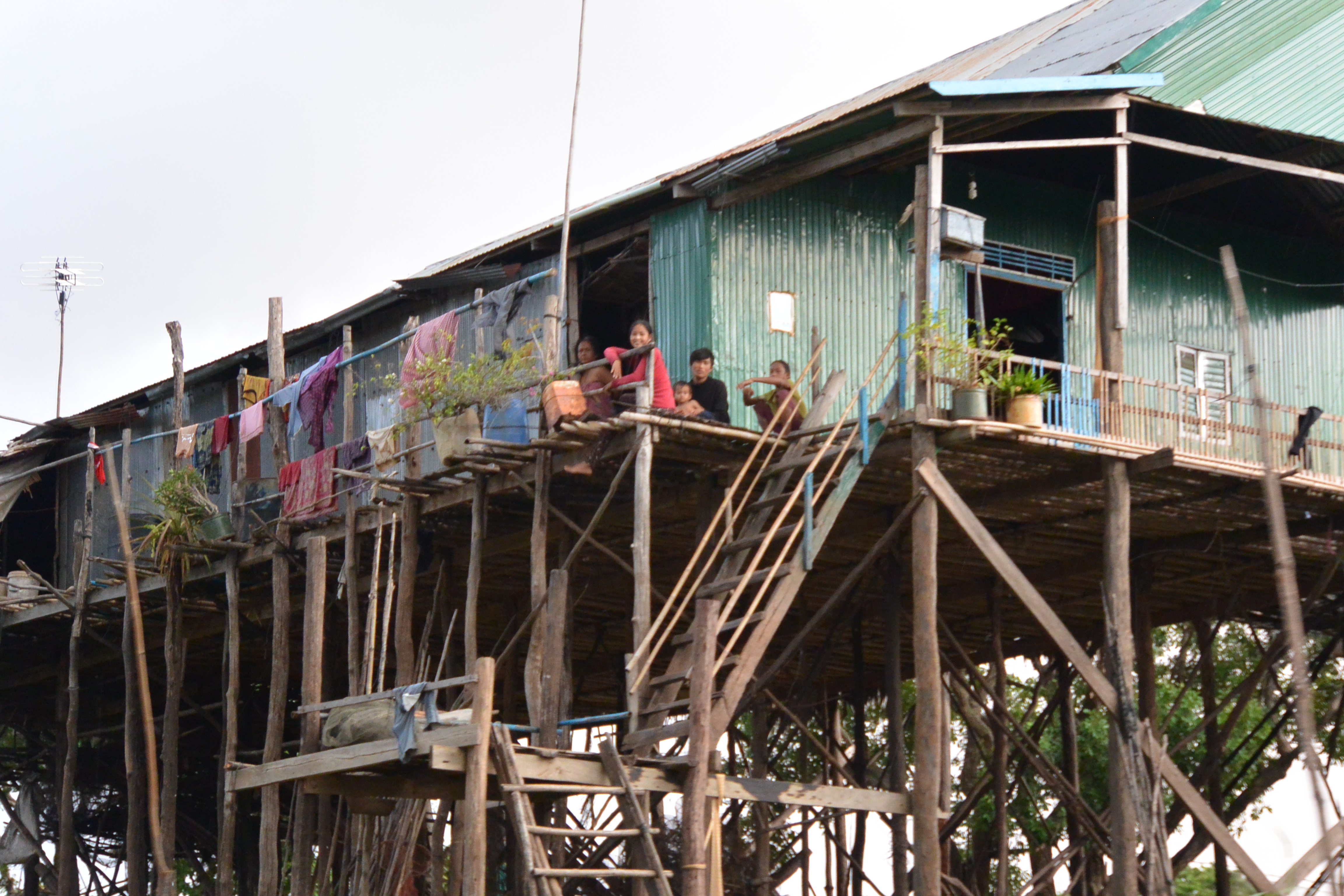

Kompong Phluk is different. It’s a real village, where people live all year round. For part of the year, during the rainy season, it’s only accessible by boat.
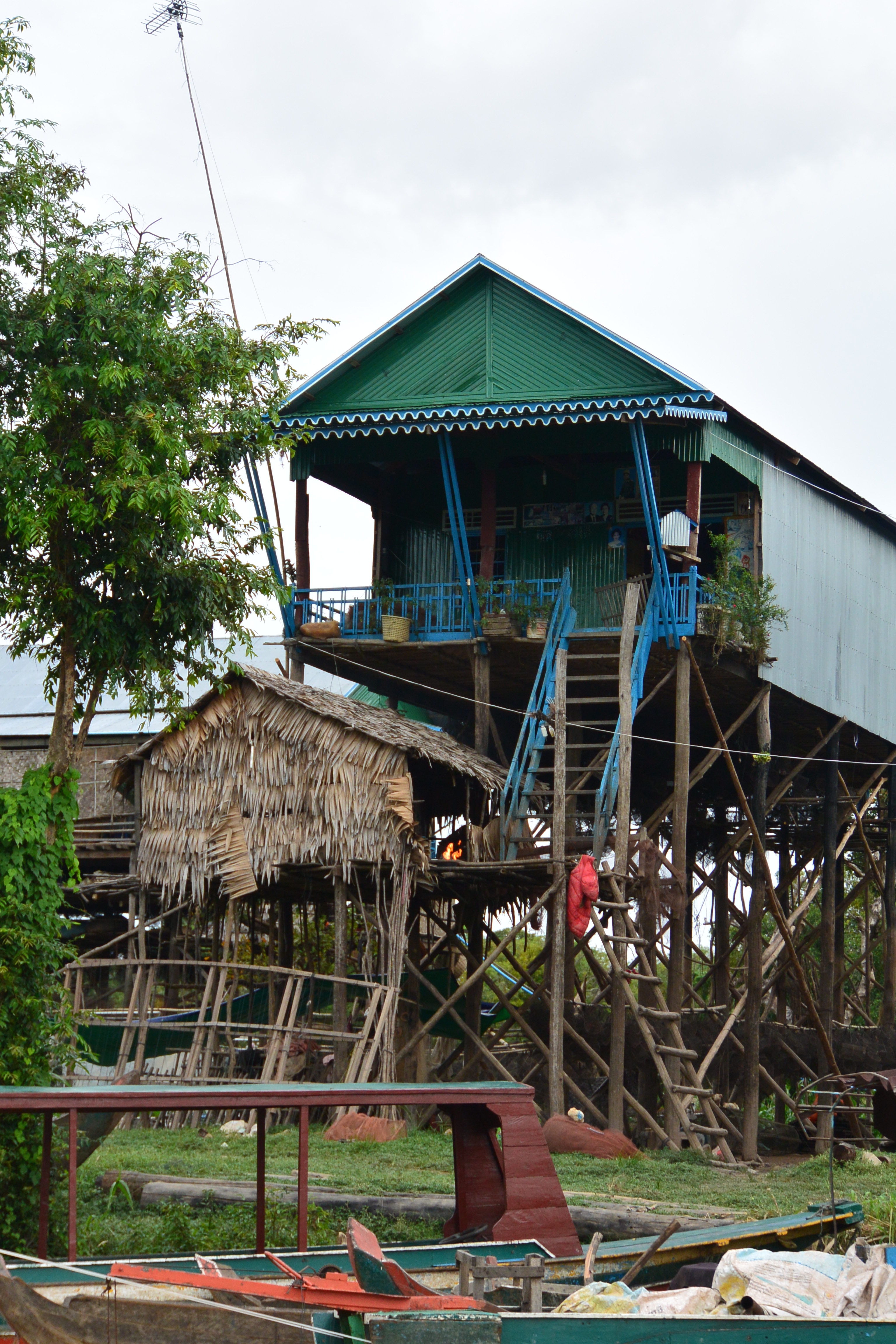
It was really neat to see how people lived there. They have no electricity, and they are dependent on the river for their way of life, many of the people who live here are fishermen by trade. Our guide was telling us that the really rich people in the village are the ones who live in the tall houses, and some of them even have generators.
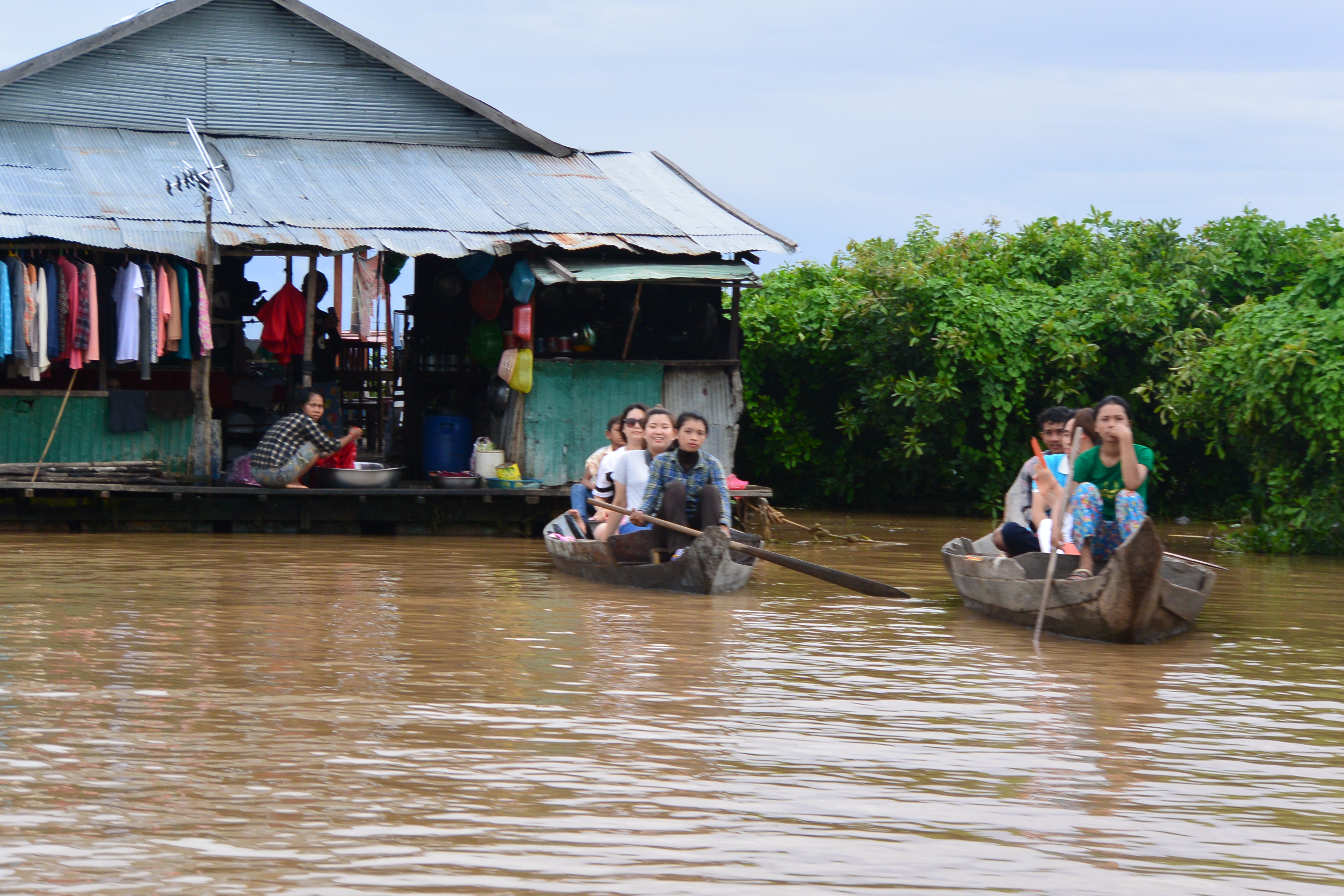

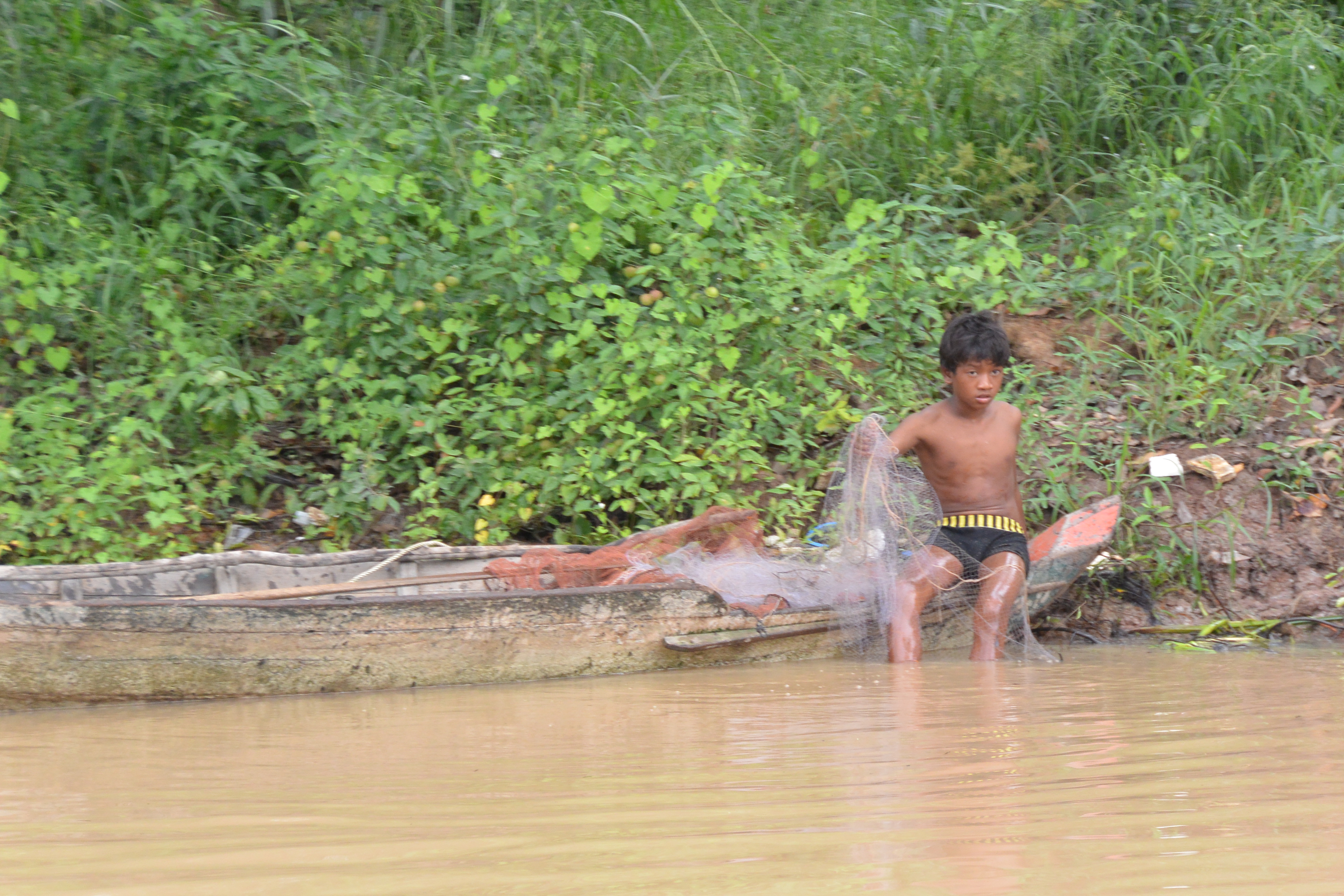
The poorer families in the village just live in their boats, the entire family lives and sleeps there.
We went all the way down the Tonle Sap river in our boat, checking out the village, there are homes on both sides, and the school. There is also a small health clinic.
At the end of the river, you come out onto the Tonle Sap Lake. It is completely massive, I’ve never seen a lake that big, you can’t see land across it so it feels like the ocean on a very calm day.
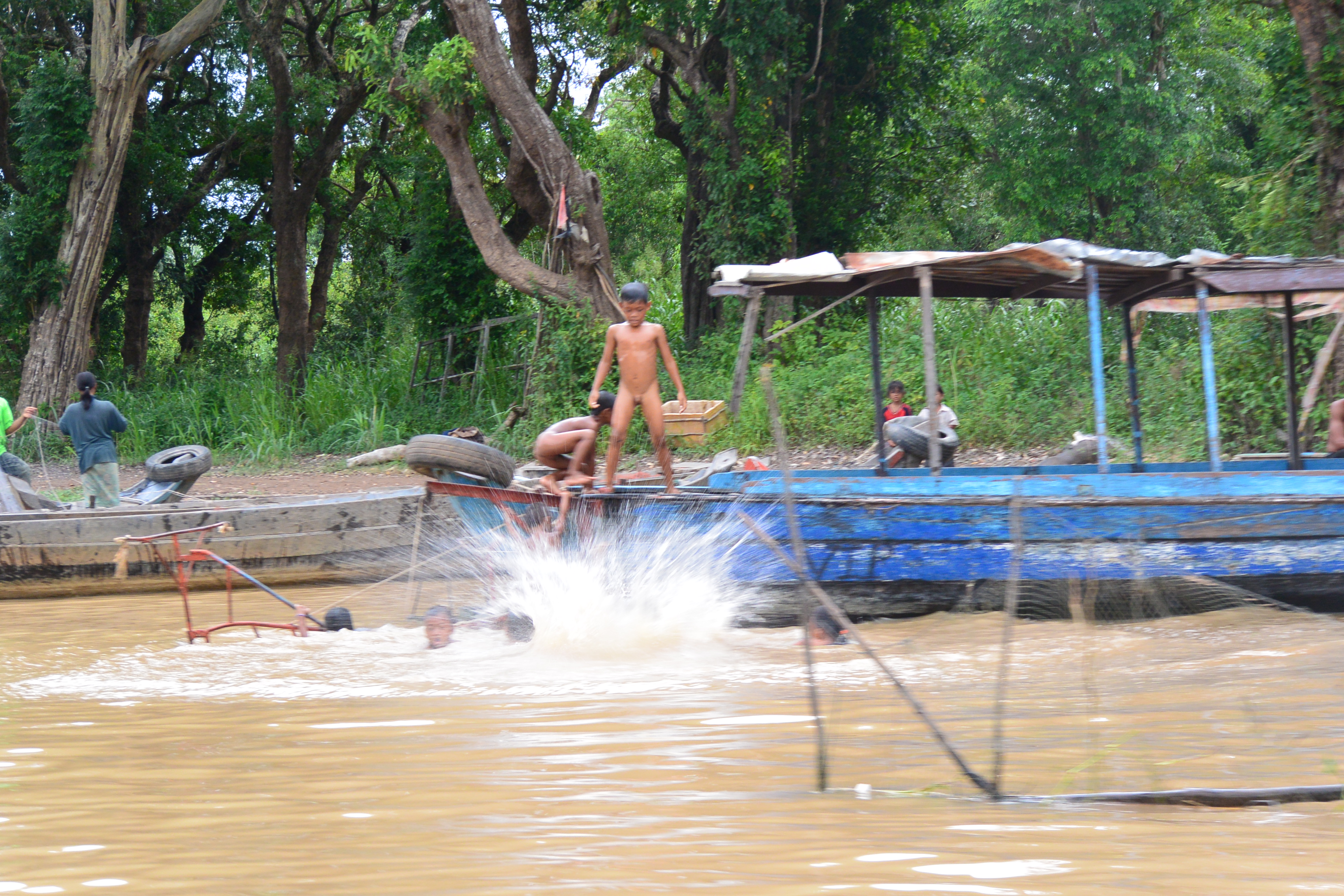
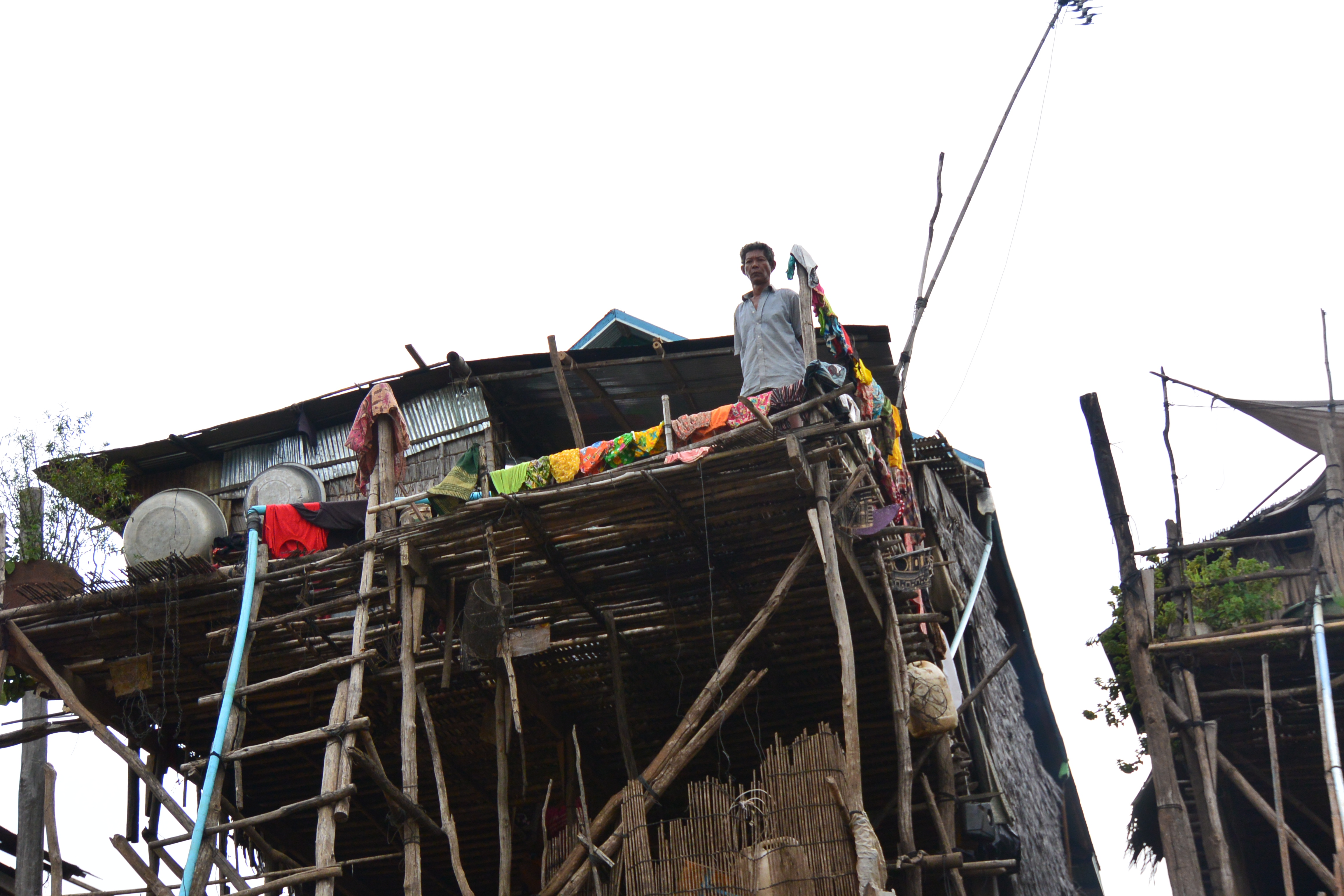
Also, because of the time of year when we were there, the water was a deep brown colour, due to the sediment that runs down from the mountains during the rainy season, so it didn’t even look like water at all, it kind of looked like the ground. It was pretty cool.


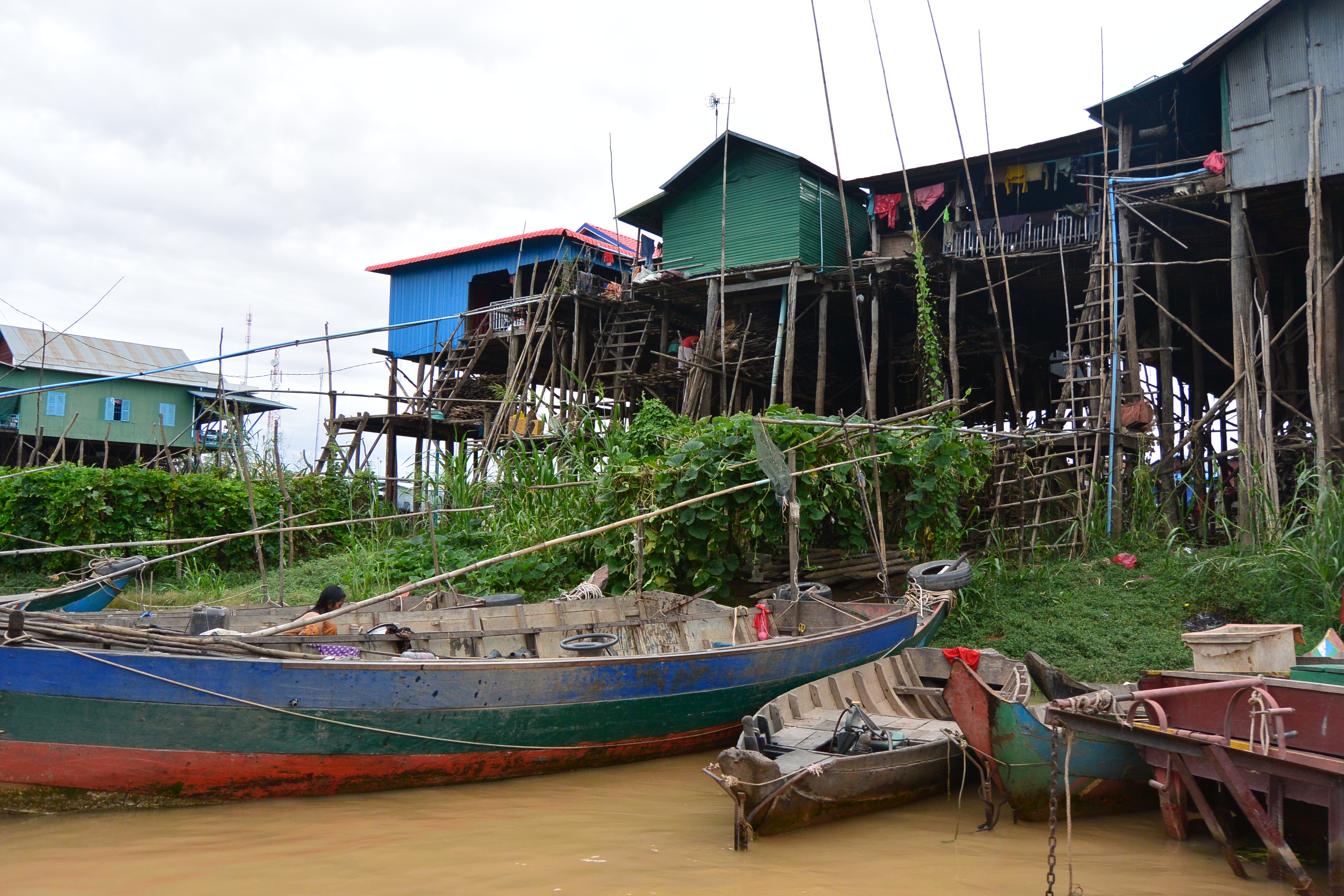
Also, during the height of the rainy season, the mangrove forests nearby flood with water, and you can take a small canoe for a twisting, turning cruise through the trees.
If you get the chance to visit Kompong Phluk, I’d definitely recommend it. It’s so different from our way of life, and gives important perspective. The people there get by with so little, and they are happy.

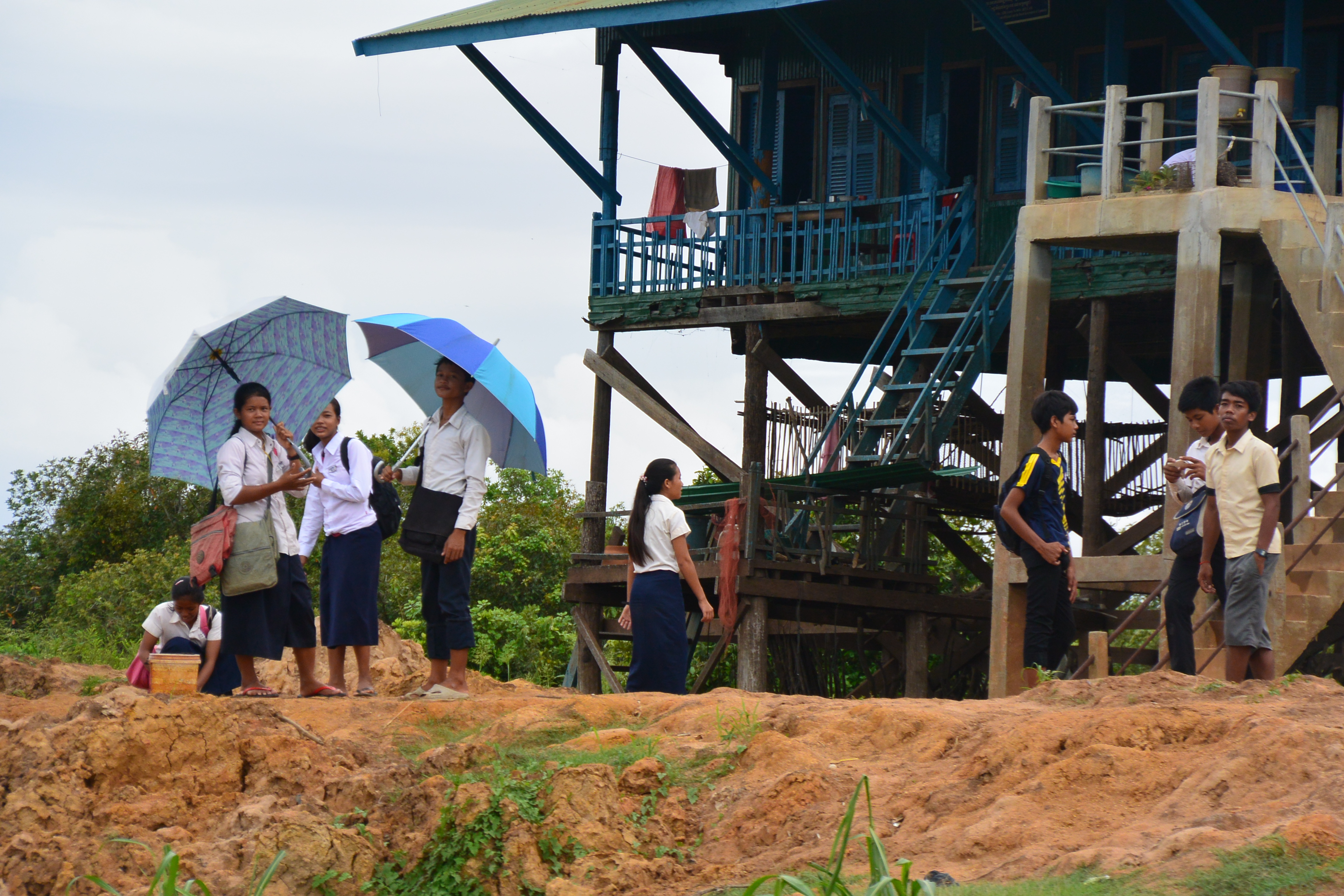
Many of us have way more than we need, and still don’t feel like we have enough. We can definitely learn something from the people of Kompong Phluk.


“It is better to kill an innocent by mistake, then to allow an enemy to go free by mistake”- Pol Pot
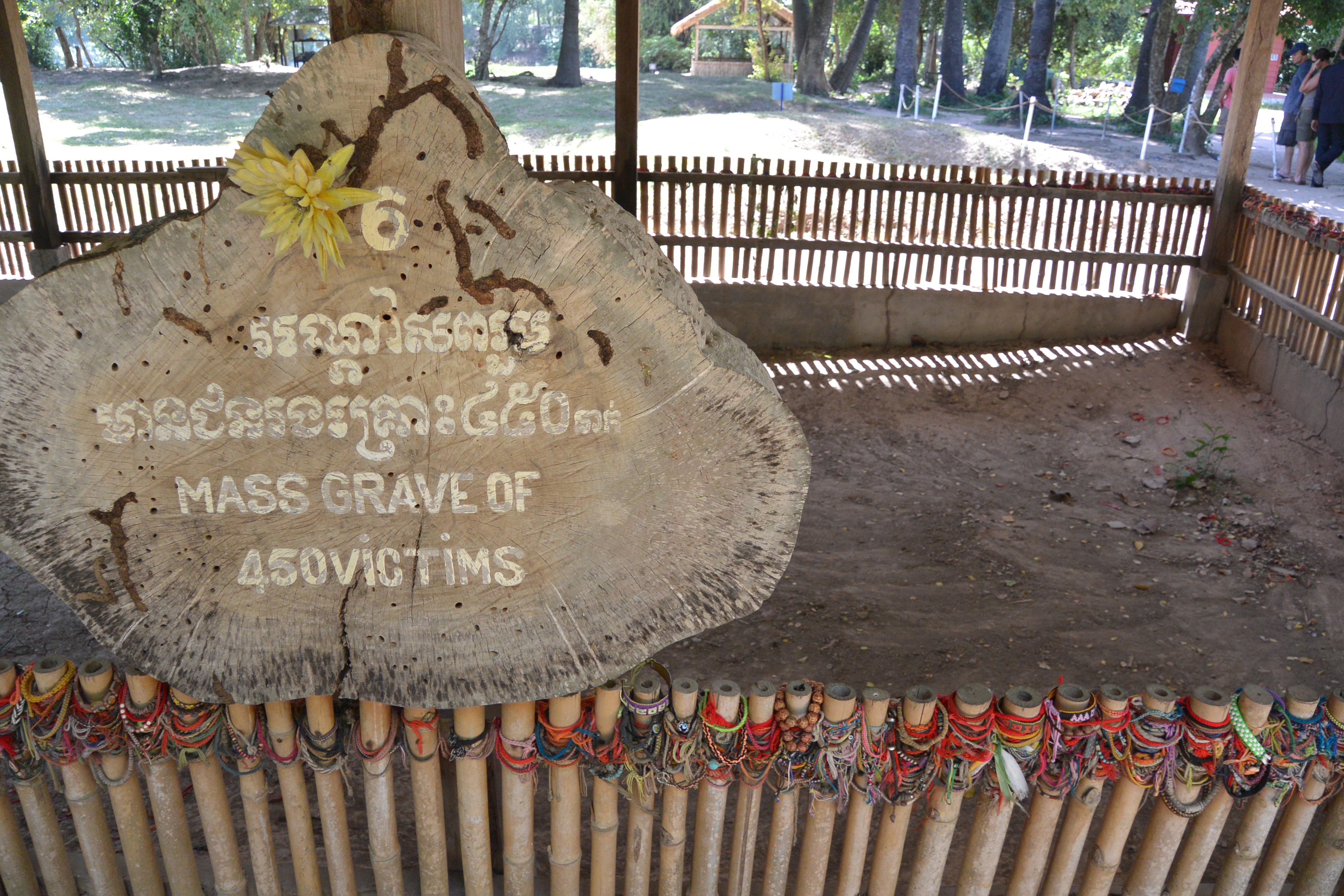
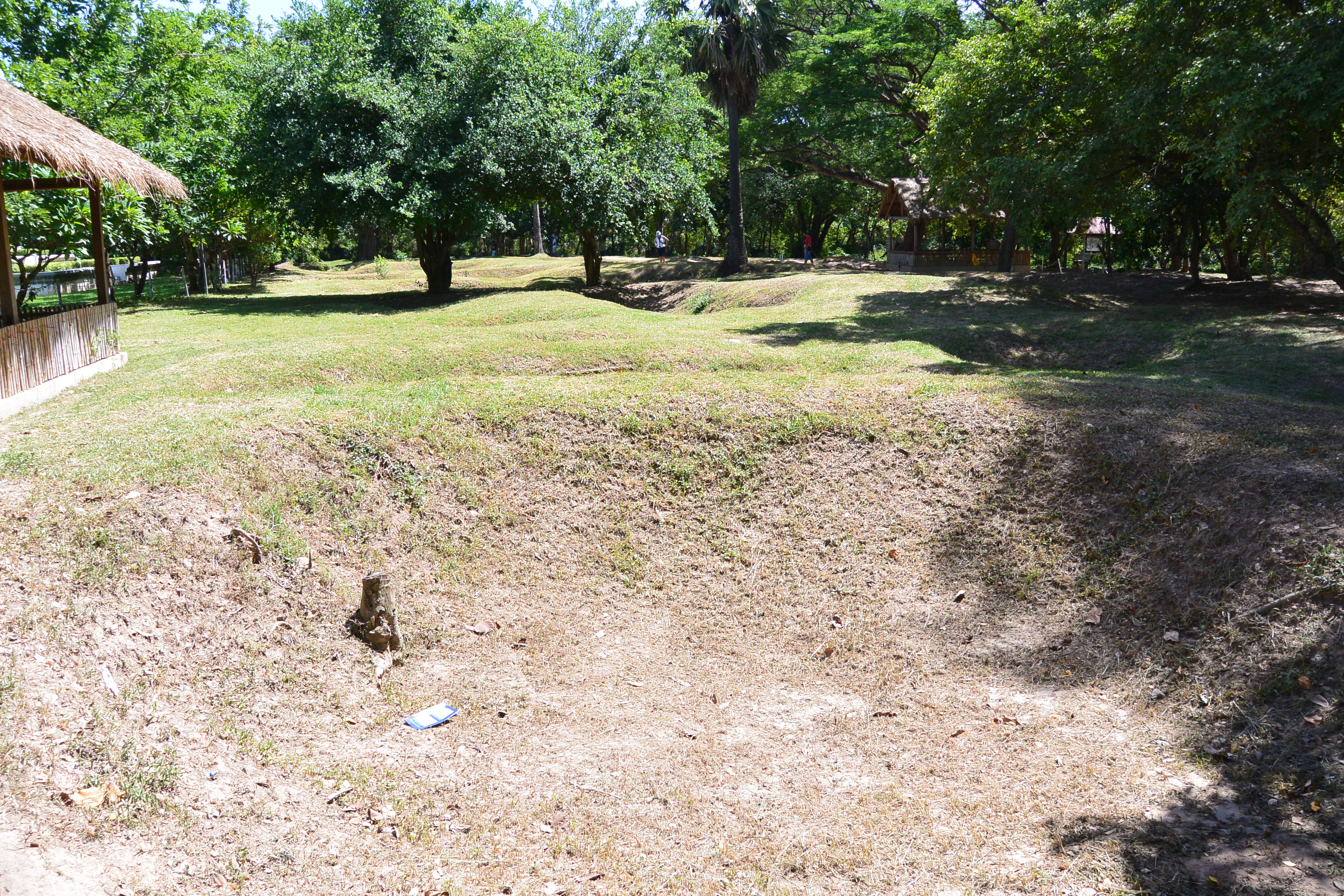
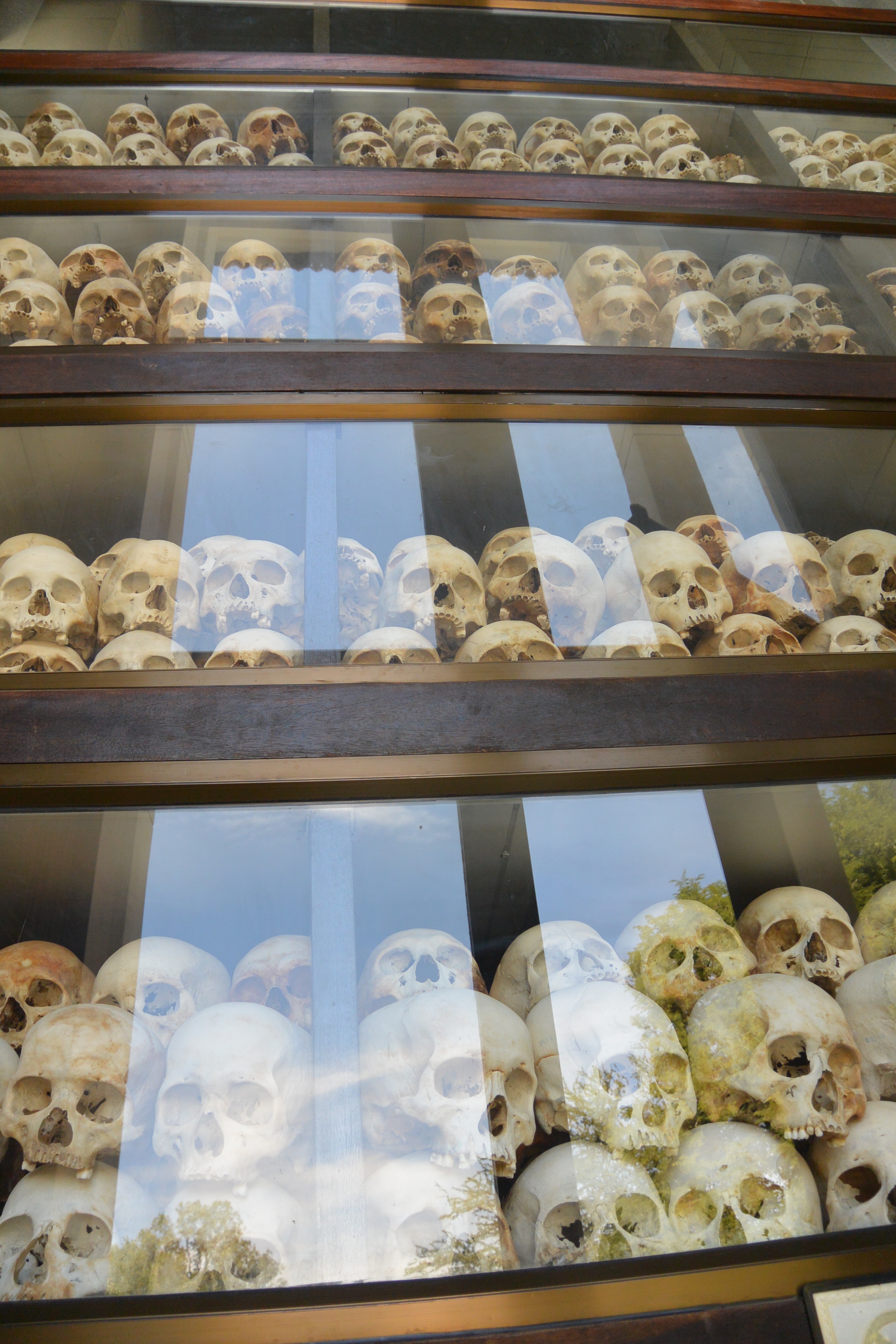
If you’re going to be in Phnom Penh, make sure you allow time to visit Toul Slang and Choeung Ek, better known as The Killing Fields. During the time the Khmer Rouge was in power in Cambodia, 1.7 million people were killed, many of them in execution areas like this. That’s 21% of the population of the country.

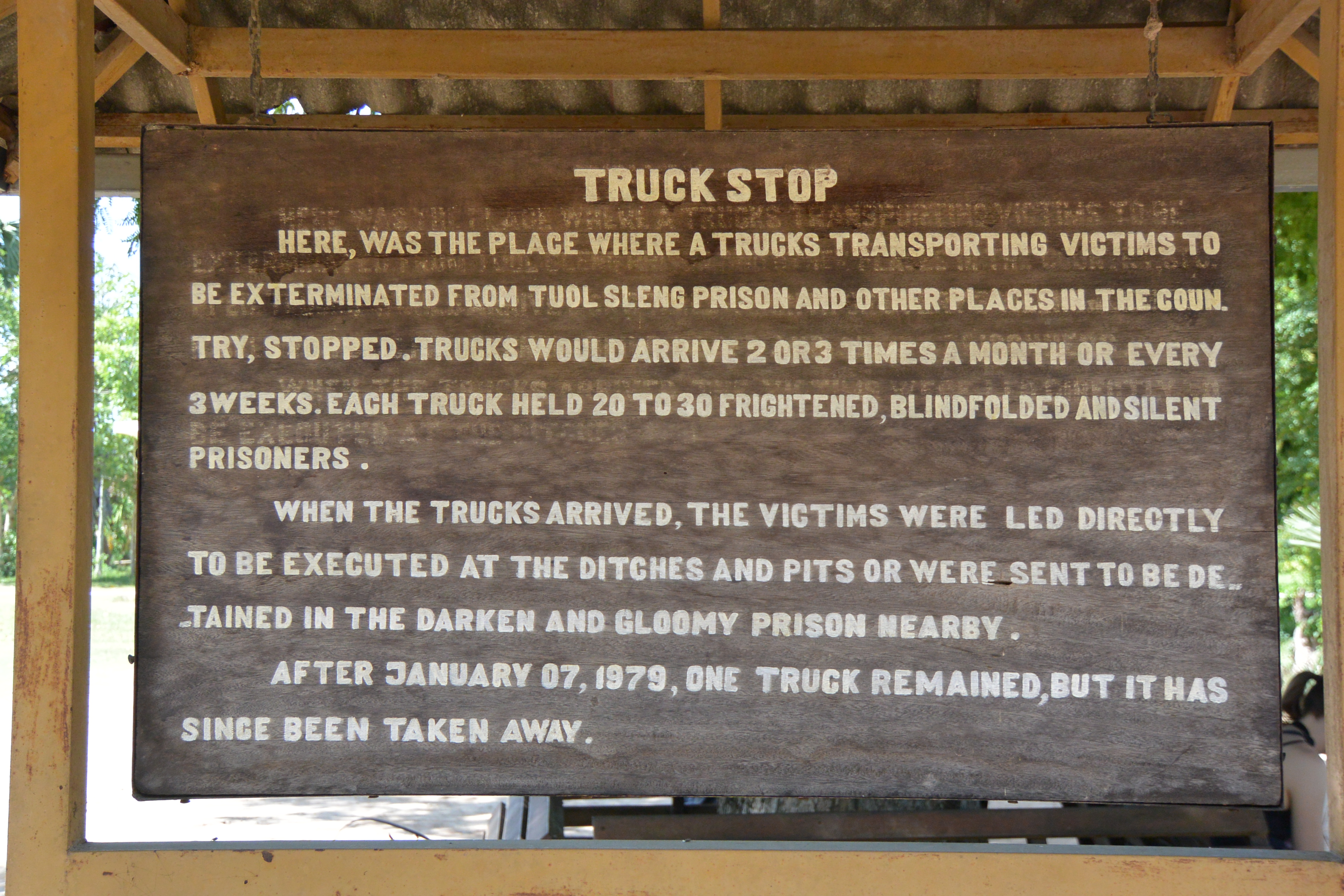

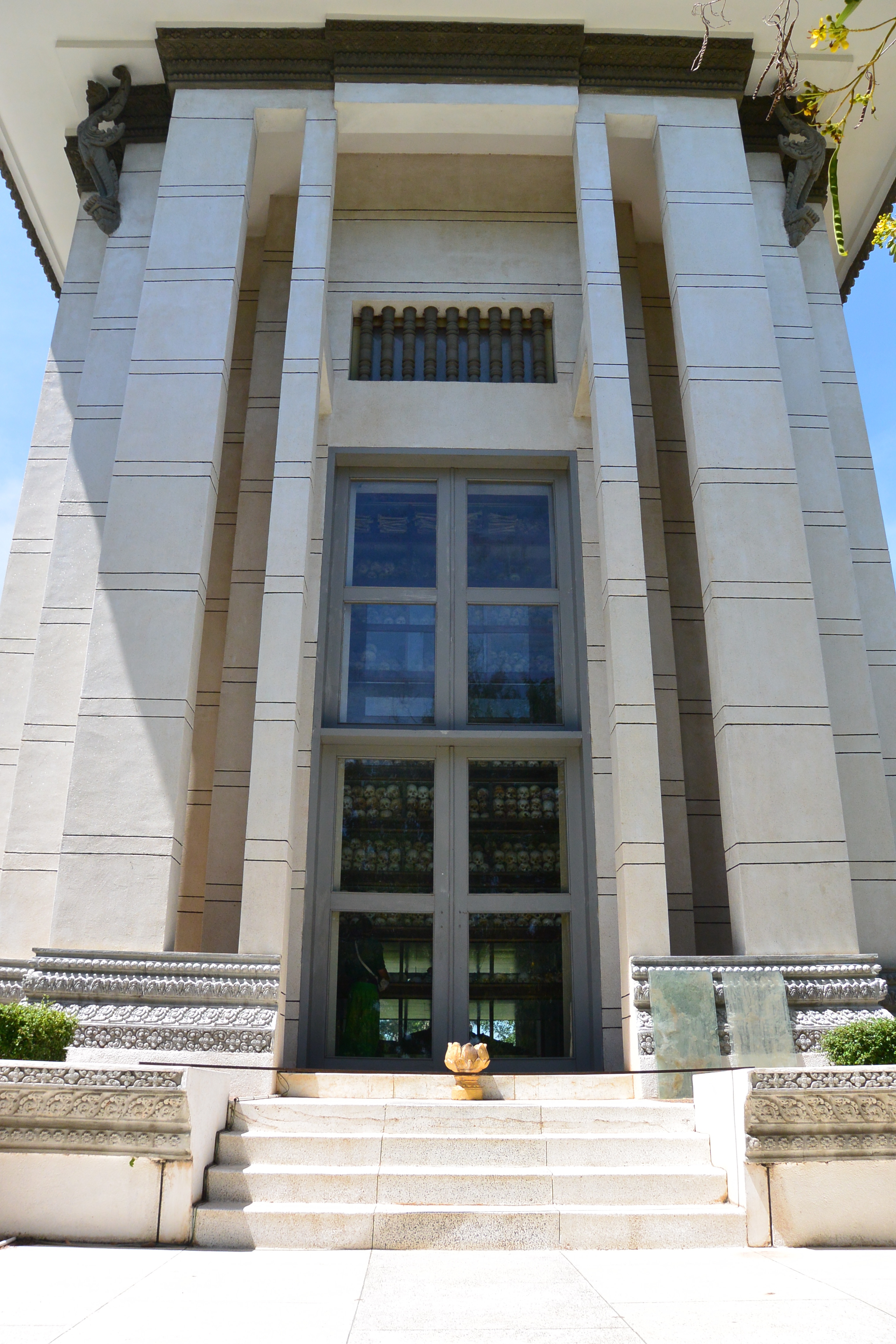
There are hundreds of killing fields all over Cambodia, but Choeung Ek is the largest, and was chosen for the site of the Cambodian Genocide Museum.
When you enter the gate at Choeung Ek, you pay for your ticket (I believe it was about $4USD per person) and get a small audio player with head set, so you can take the audio tour as you walk around the grounds.
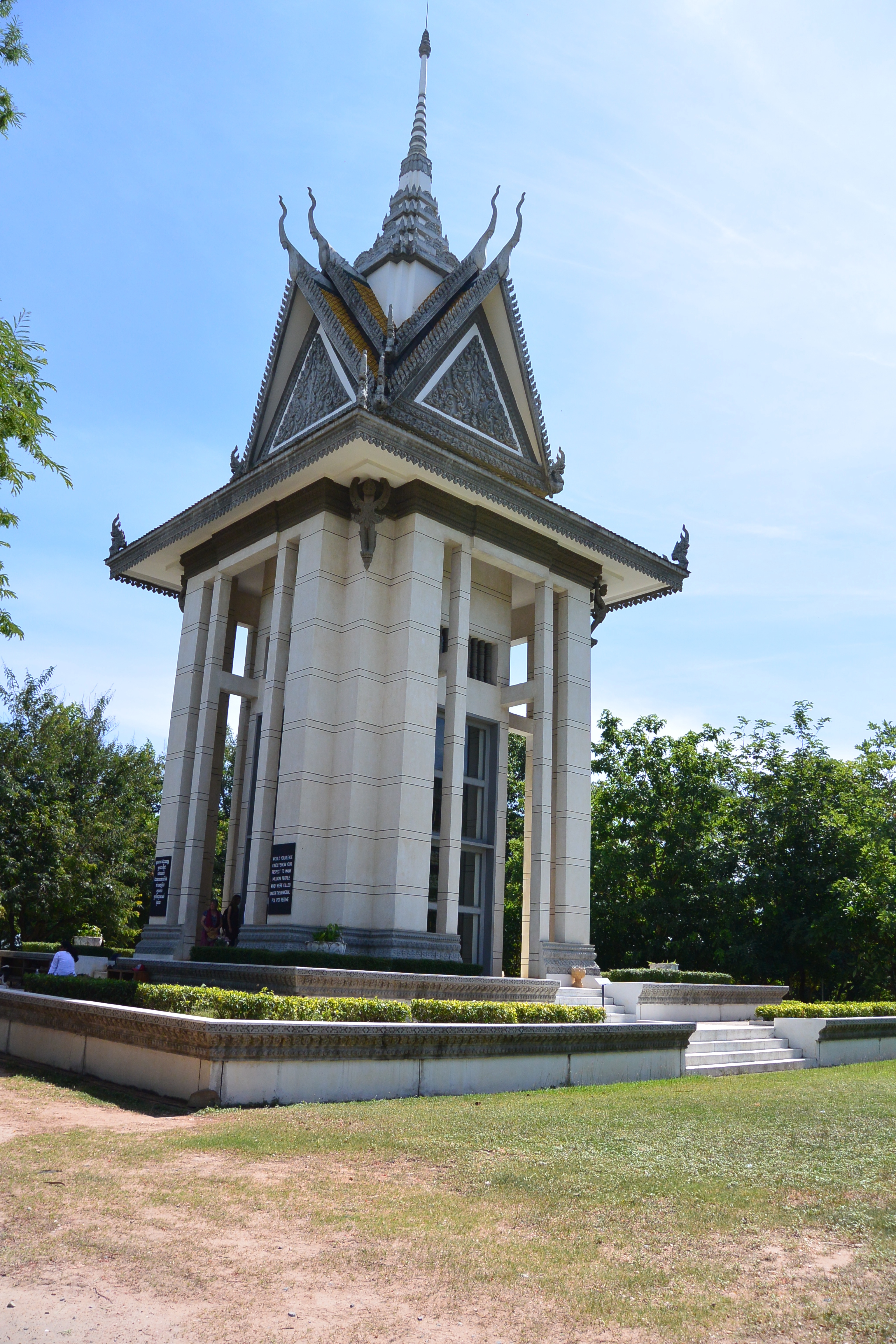

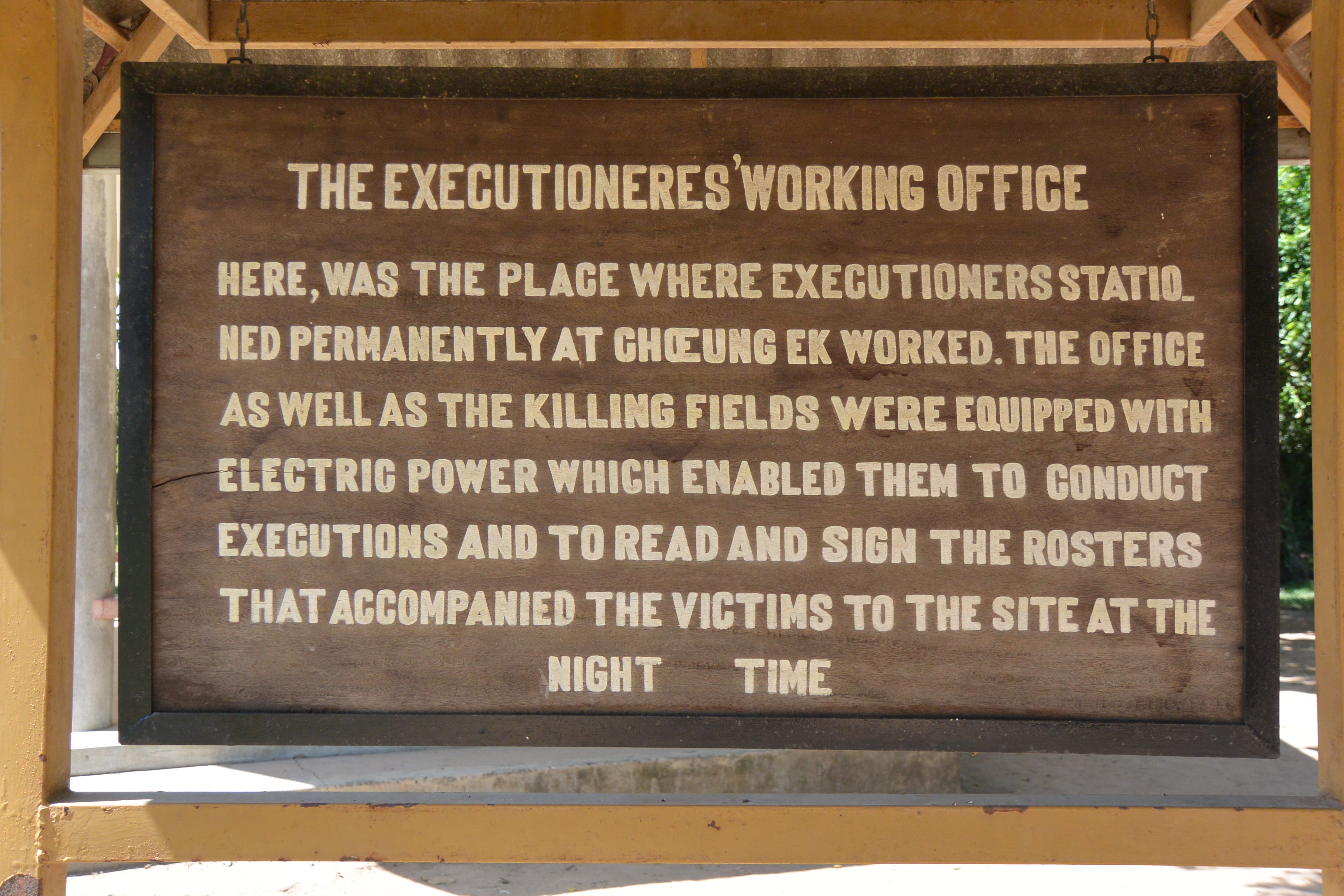
At each stop, numbered 1-18, you learn more about the things that happened at Choeung Ek, and there are also additional recordings you can listen to, of people telling their stories about life under the Khmer Rouge.
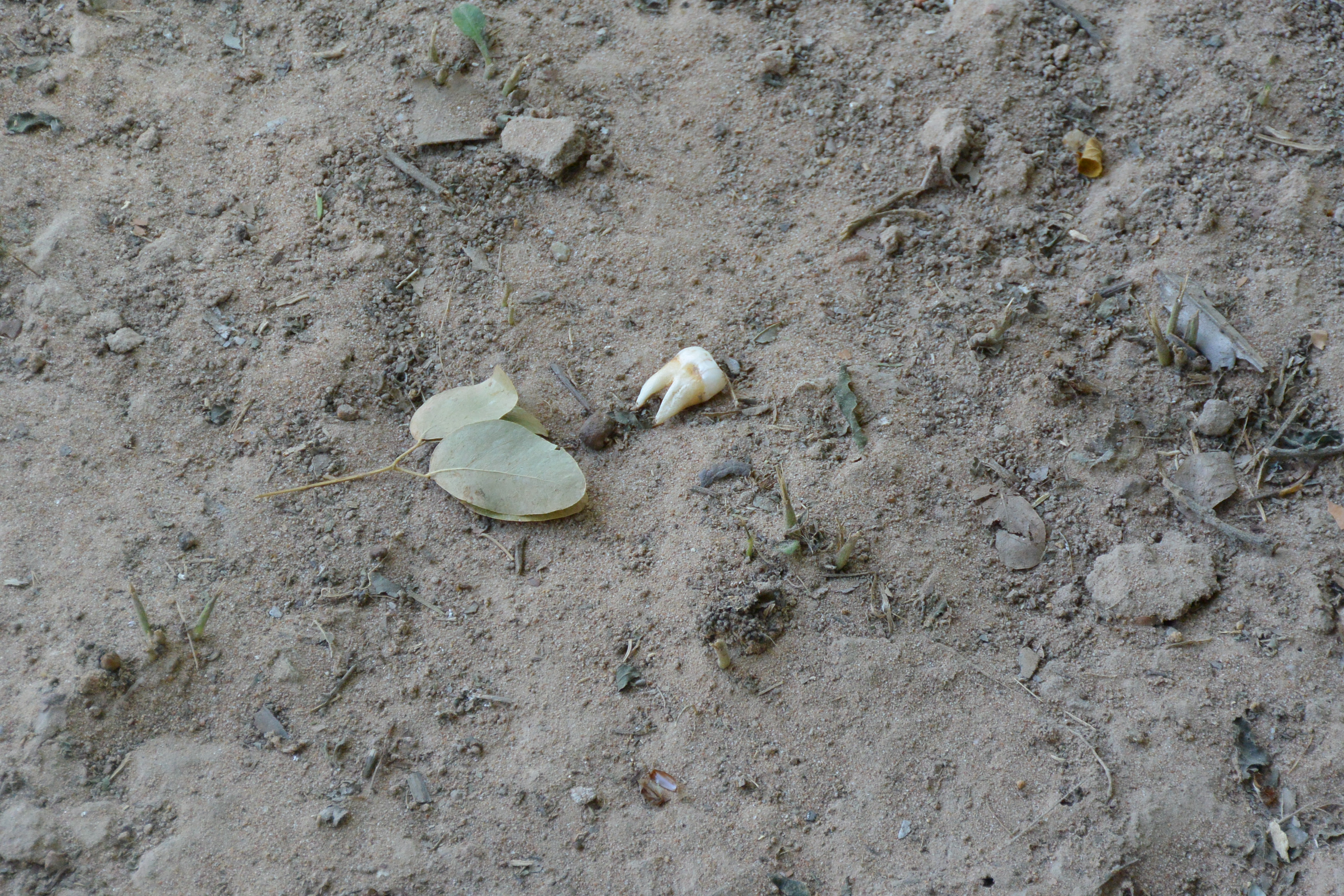
It is very hard to walk around the grounds and listen to the audio tour, and picture all of the horrible things that happened there. It made me feel sick to my stomach, even though it is a very green and peaceful place now, there are still reminders of the atrocities that occurred there surfacing through the dirt.
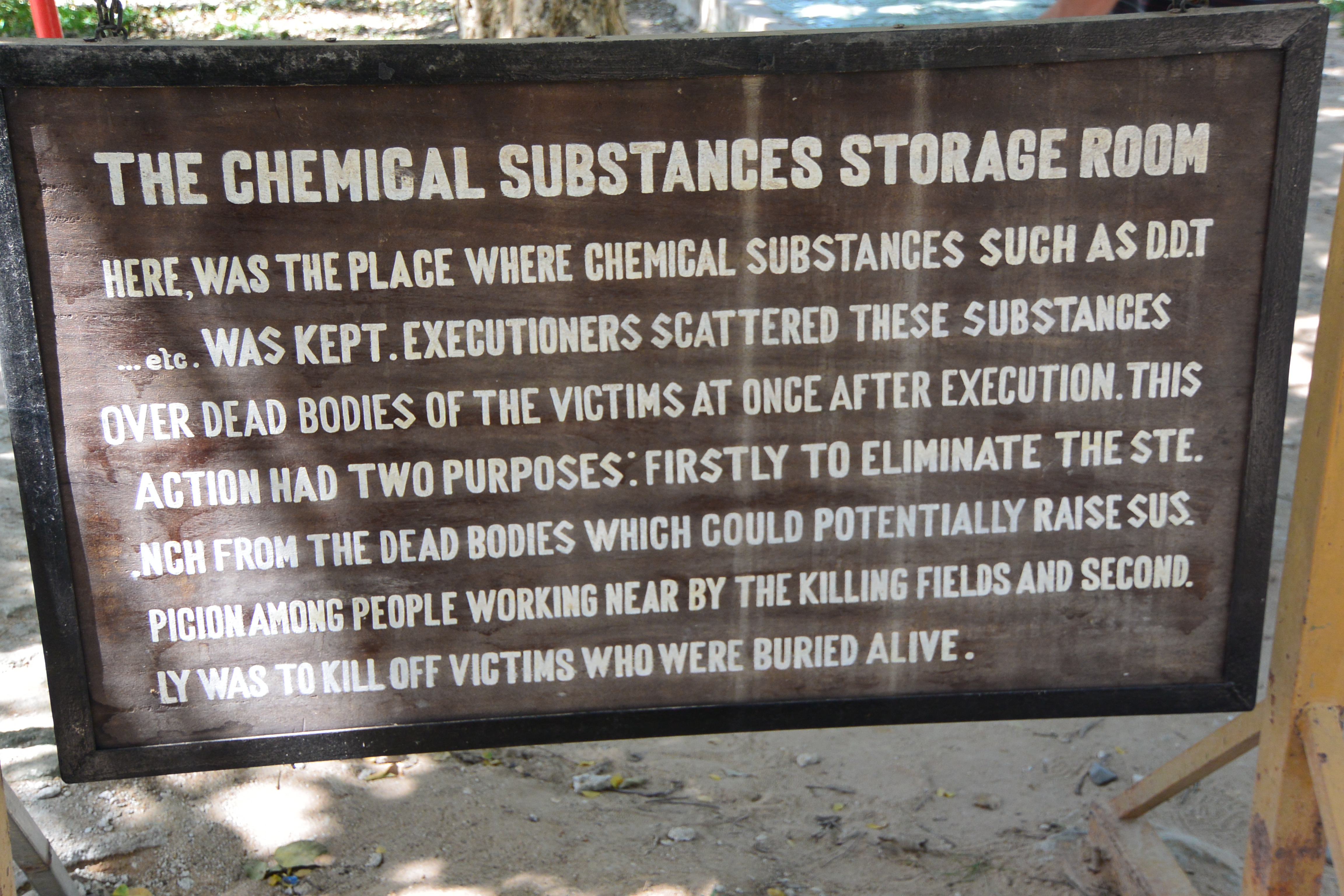
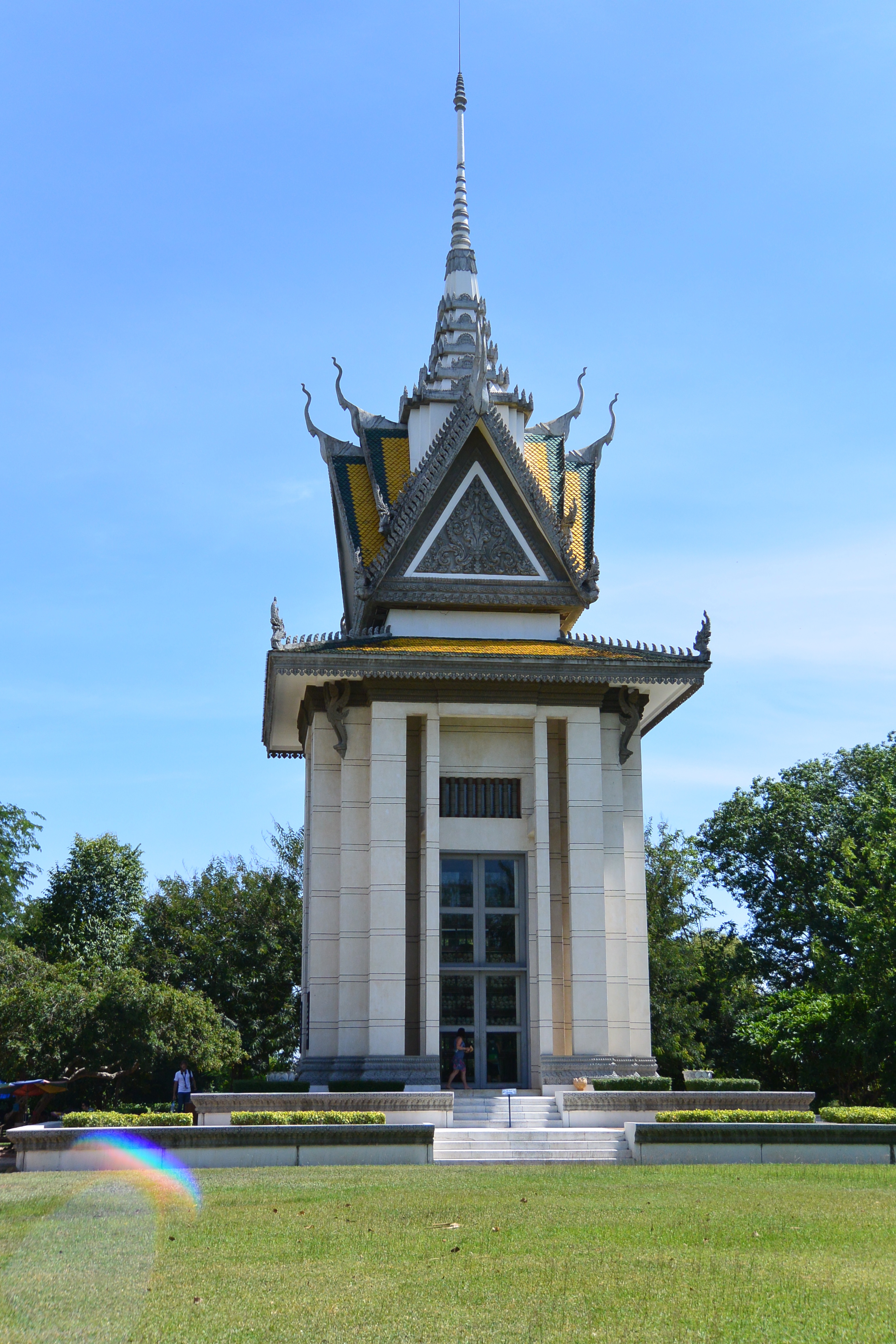
Because so many people were buried in the mass graves, even though many of them were re-buried once the Khmer Rouge regime fell, and Choeung Ek was discovered, teeth and bone fragments, and scraps of the victims clothing can be seen all over the ground, especially after a big rain storm. The staff at Choeung Ek goes around every few weeks to pick up these fragments and place them in sanctified collection cases.
The audio tour describes how people were transported to Choeung Ek, and then herded over to pits, where they were killed, usually by blunt force trauma. Bullets were expensive, so they weren’t used.

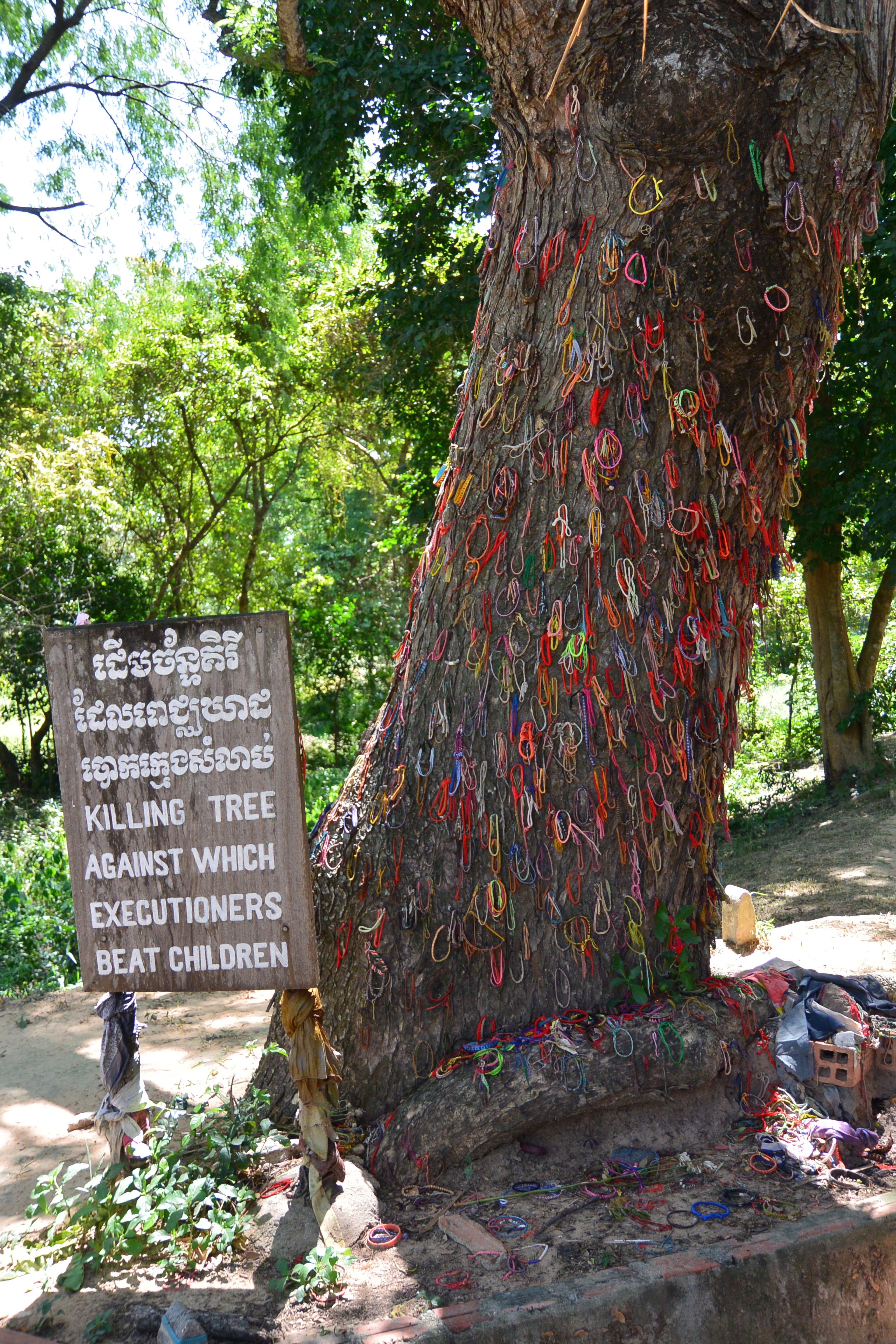
The most horrible thing at Choeung Ek, for me, was the killing tree. In order to kill babies with the least effort, and without using bullets, Khmer Rouge soldiers would lift them by the feet, bash their heads into the tree, and then throw them into the nearby pit.




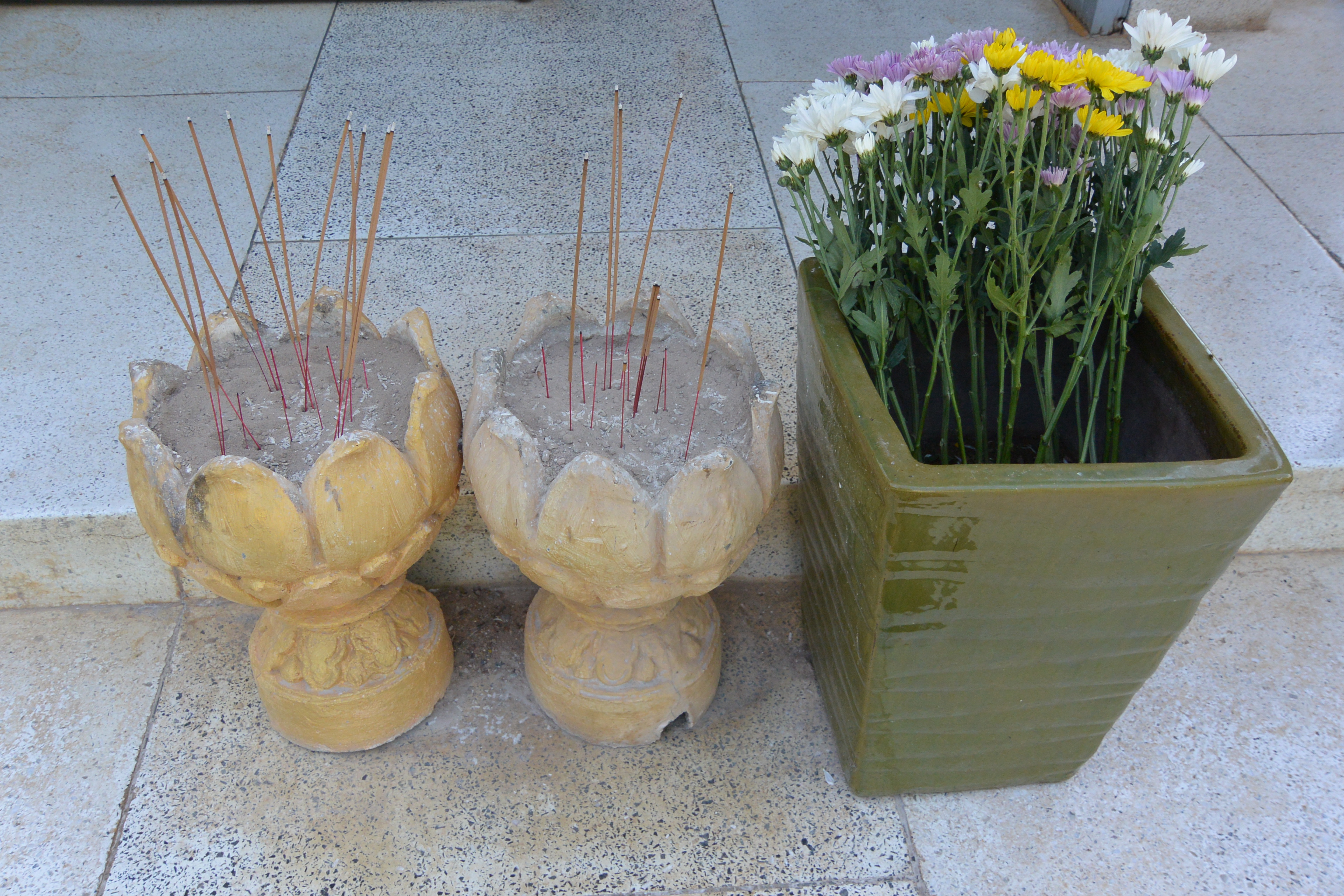
It is very difficult to visit the Killing Fields, and to be face to face with the absolute worst of humankind, but it is important to understand what those people went through, and to give them the respect of acknowledging that these things really did happen.


It also makes you angry though, and really reinforces the point that things like this are still happening in countries all over the world. It seems like there should be more that we can do to stop it now, while it’s happening, instead of waiting 40 years to visit the museum.
You can learn more about Choeung Ek here.


 loveliness.